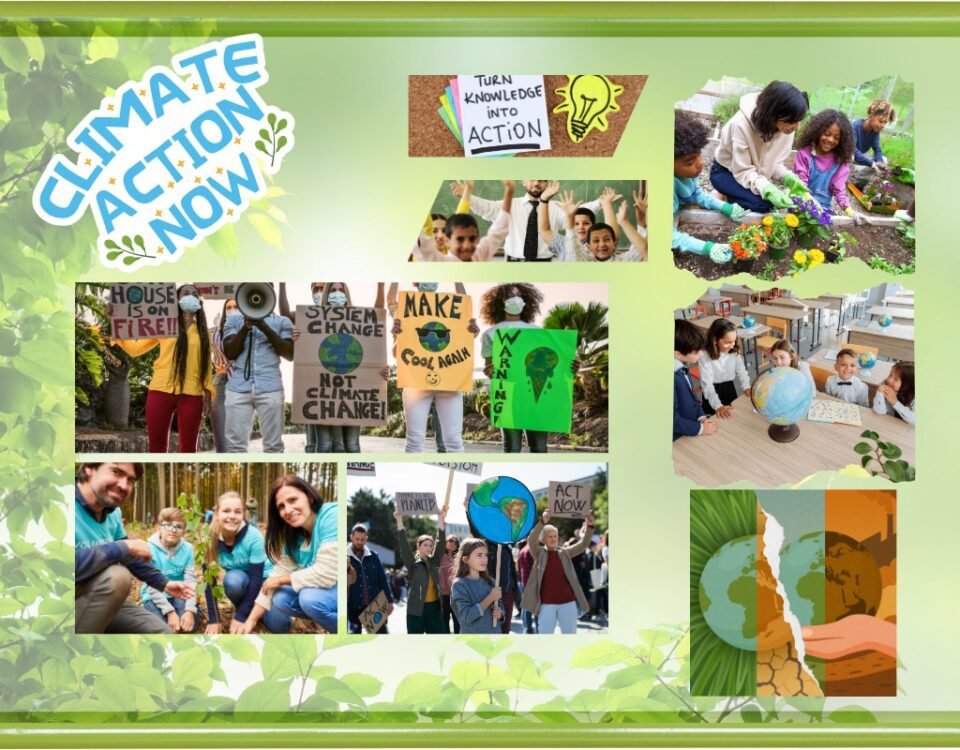
Expert Views: How Education is a Driver of Climate Action?
“Twenty-five years ago people could be excused for not knowing much, or doing much, about climate change. Today we have no excuse.”
— Desmond Tutu, Former Archbishop of Cape Town
That “no excuse” moment is exactly where things get interesting—because knowing isn’t the problem anymore. What really matters is how we learn, when we learn, and who gets to build those habits first.
Climate Action Starts With Early Learning
Give an adult a sustainability checklist, and they’ll ask for data, proof, and exceptions. Give a child the same list, and they’ll ask, “Can I try?” That difference matters. Education taps into that openness early, shaping how children think about climate action, everyday choices, and living in sync with the planet—before habits harden and resistance sets in. When kids learn to care for the planet as part of everyday life, climate action stops feeling like an extra task—and that changes everything.
We know learning doesn’t come with an age limit. But in a world of routine and convenience, age-old traditions of sustainable living often get forgotten. Starting early just clicks—up to 90% of a child’s brain develops by age five, laying the foundation for lifelong learning and behaviour. And today, with educators, thinkers, and platforms like ours creating accessible climate-focused learning, there’s really no better time to begin.
What Educators Say About Early Learning
From classrooms to communities, educators see the impact of early learning every day. They understand how young minds absorb values, habits, and curiosity long before they understand consequences. Here’s what they have to share.
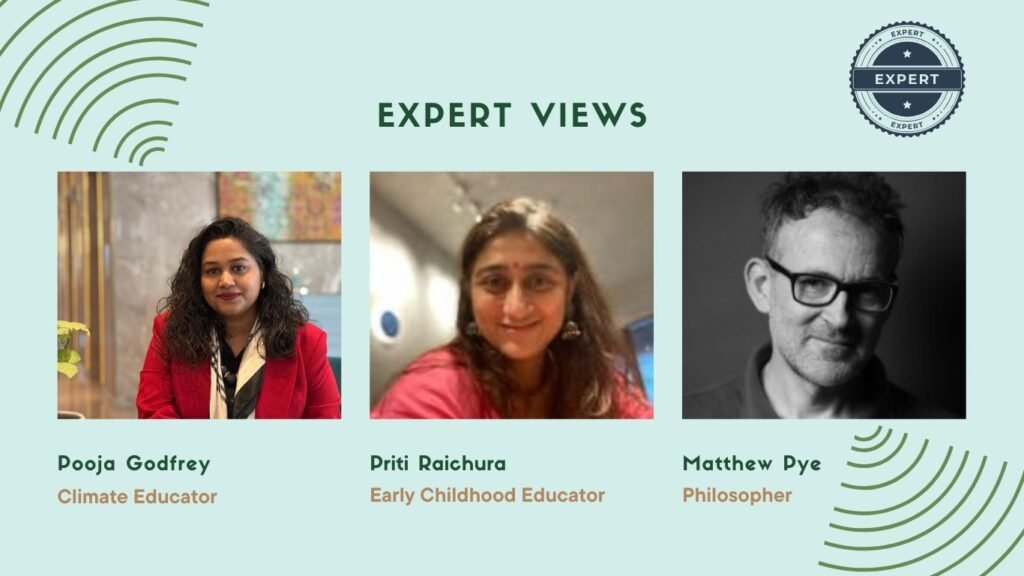
We spoke with Mumbai-based climate-educator Pooja Godfrey, who believes climate action begins in classrooms. When teachers become climate mentors, and learning becomes playful—with simulations, stories, and big questions—education moves beyond facts and helps children connect everyday choices to larger systems shaping the planet.
Priti Raichura, a passionate Montessori educator, believes sustainability begins with respect—for the child, for nature, and for the interconnected world they grow into. Her approach, through her Womb to World initiative, is rooted in observation, independence, and hands-on learning, nurturing mindful choices early on and proving that when children learn to care gently and consciously at a young age, sustainable living becomes second nature—not a lesson, but a way of life.
Matthew Pye, a philosopher, educator, and founder of Climate Academy, believes education is where climate awareness turns into real action. He points out that while kids learn to care for the environment early on, deeper climate conversations often disappear as they grow older. Through Climate Academy’s systems-led approach, Matthew makes space for curiosity, complexity, and big questions—helping students move past fear and step into informed, confident climate action.
Education: The Quiet Influence Shaping Climate Action
Before children learn how to change the world, they learn how to see it. Early education has the power to frame climate not as a crisis to fear, but a shared responsibility to care for. When children are encouraged to question, connect, and care early on, climate consciousness becomes instinctive. These quiet lessons grow into values that guide choices long after the classroom fades.
Vedak Foundation is one such non-profit working to transform rural schools by blending modern technology with meaningful climate education. By equipping classrooms with digital tools, they’re helping young minds see opportunity, responsibility, and possibility together. Visit our fundraiser page, created in support of Vedak Foundation, to contribute and be part of this impact.
And if you’re looking to deepen your understanding of climate action, explore Planet Pact’s Climate Talks – a space where educators, activists, thinkers, and changemakers unpack climate issues through honest conversations, fresh perspectives, and real-world solutions.
What’s one thing you wish you’d learned about climate action sooner? If sustainability was taught from day one, what do you think would change? How do you see education shaping climate action? Let us know in the comments.
Education is just one of the many conversations that link back to climate action—sometimes clearly, sometimes in quieter ways. Going forward, we’re excited to explore more areas like waste management, water, clean energy, food systems, biodiversity, and the everyday choices we rarely think twice about. Because climate action isn’t one loud headline; it’s built from many smaller, connected conversations. Stay tuned. We’re just getting started.