Hope for Wildlife Conservation: Remarkable Women You Need to Know
SDG 15: Life on Land focuses on protecting biodiversity and the ecosystems that sustain it. But as climate change intensifies, its impact on wildlife is becoming harder to ignore—habitats are shrinking, ecosystems are shifting, and many species are being pushed closer to extinction. This raises an important question—who is stepping up to protect the wild?
While a lot of work is already happening, an article by the United Nations made us look at it through a new lens. It talked about women driving climate action, and that made us connect the dots between women and wildlife—both facing the effects of climate change. In fact, an estimated 4 out of 5 people displaced by climate change are women and girls, and nearly one million species are at risk of extinction due to human activities and climate change.
And more importantly, it showed us that women aren’t just affected by these changes, but they are playing a key role in protecting wildlife. So we decided to spotlight the women making a difference.
Women Driving Change in Wildlife Conservation
You know how sometimes we think wildlife conservation only happens out there—deep in forests or national parks orinside some research lab? It actually starts much closer to home. And surprisingly, women are often at the heart of it—quietly driving climate action in ways that protect the wildlife we all share this planet with.
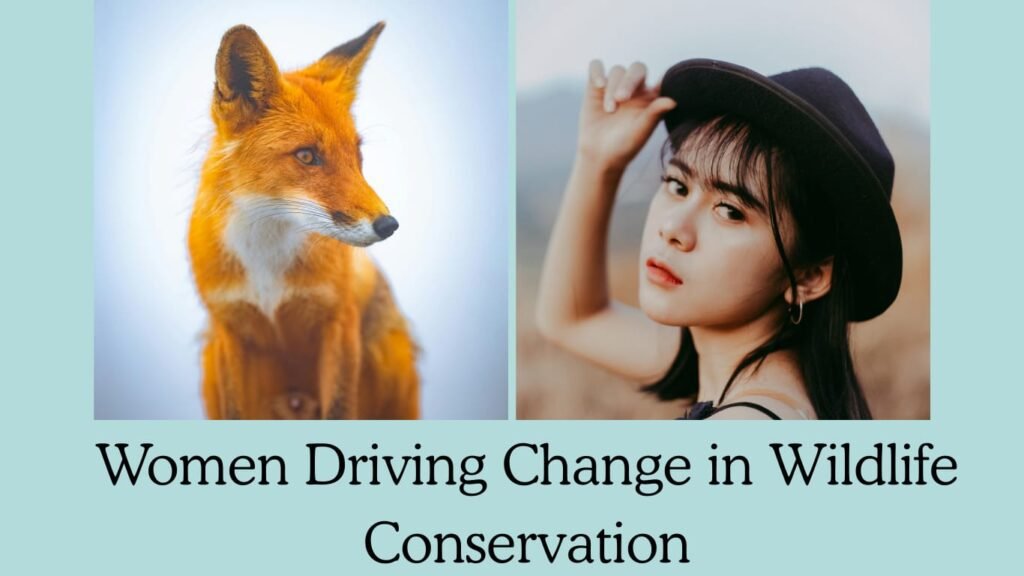
So how exactly can women make a difference in conserving wildlife?
- Through Everyday Choices: Women often manage household chores, which means their everyday choices—what to buy, use, or throw—can directly reduce waste and emissions. These small decisions collectively play a big role in lowering environmental impact and protecting ecosystems.
- At Work & Within Organisations: From climate talks to boardrooms to forests and farms, women can and are already shaping real solutions. Especially Indigenous women, whose deep-rooted knowledge helps protect wildlife while also helping communities adapt to climate change. According to UN Climate Change News, when more women are involved, climate action becomes smarter, more inclusive, and works better.
- Through Policy & Advocacy: When women are part of decision-making, climate action tends to be stronger and more effective—and that directly benefits wildlife too. In fact, countries with more women in leadership are more likely to support environmental treaties, which often include protecting biodiversity and natural habitats. That’s why global platforms like the United Nations Framework Convention on Climate Change are pushing for equal participation—because better representation leads to better climate and wildlife conservation decisions.
Wildlife Conservation: Women in Action
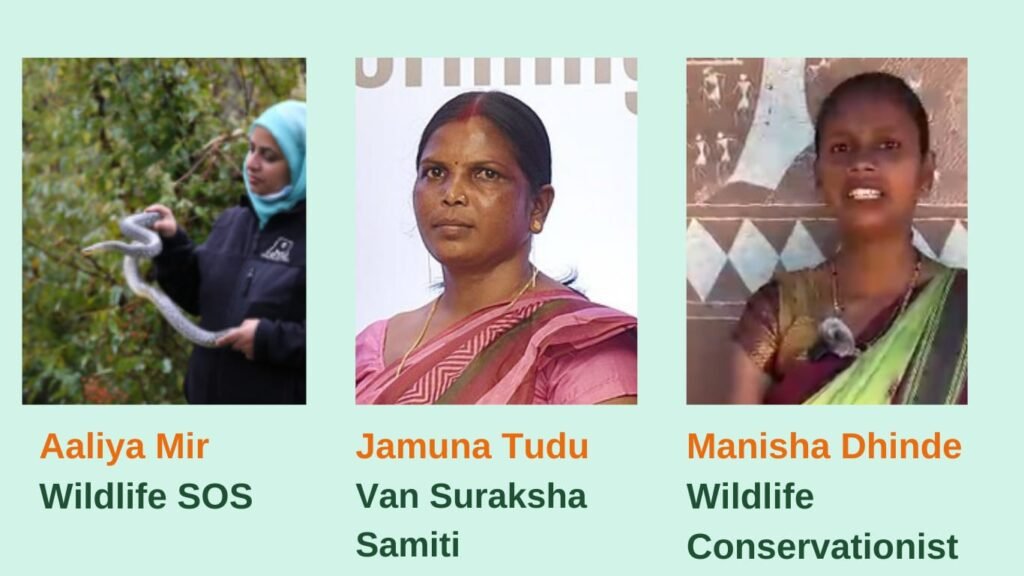
It’s one thing to talk about change—and another to actually make it happen. Behind many conservation success stories are women quietly doing powerful work. And, by doing their work, they are protecting wildlife, challenging the status quo, and proving that conservation isn’t just a concept, it’s an action.
Aaliya Mir, Education Officer & Program Head, Wildlife SOS
Here’s a question: who do you call when a bear shows up in your village? In Jammu and Kashmir, that call often goes to Aaliya Mir. She’s been doing this for over 20 years—long enough to become the first woman from the state to win a wildlife conservation award. She runs programs for Wildlife SOS, guides rescue teams, and spends her free time (what little there is) gardening.
She also leads rescue operations of wild animals, especially bears and snakes, trains teams in mob management, and teaches communities that the animals at their doorsteps aren’t enemies, but just neighbours who need a little space. Aaliya’s work blends science, education, and action—proving that conservation isn’t just about saving animals, but also changing mindsets on the ground.
Jamuna Tudu, Environmental Activist
They call her “Lady Tarzan.” But Jamuna Tudu didn’t earn that name swinging through trees. She earned it by protecting them and the wildlife that depends on them.
She is the founder of Van Suraksha Samiti, an initiative based in Jharkhand that has grown into over 300 teams safeguarding 50 hectares of forest. She mobilised thousands of women to protect forests from timber mafias and poachers. Over the years, their collective efforts have helped preserve not just trees, but the animals that call these forests home.
In 2019, she was awarded the Padma Shri for her exceptional work in protecting India’s forests and wildlife.
Manisha Dhinde Lotade, Young Wildlife Conservationist
Recently, we met someone who shifted how we see conservation. Manisha is a media student, but more than that—she’s a tribal woman through and through. Her heart belongs to Aarey Forest and the community living within it.
She leads walks through the wild, not as a guide but as someone who belongs there. She helps other tribal women find livelihoods. And she paints—Warli paintings that she calls an ancient language. To us, it’s art. To her, it’s a memory. Every brushstroke holds something older—leopards the tribes revere, forests that raised them, and stories that can’t be lost.
This is her way of protecting wildlife. Not through reports or campaigns. Through art. Through walks. Through making sure the next generation grows up knowing what the forest taught her.
Women at the Heart of Protecting the Wild
These stories aren’t just inspiring—they show what wildlife conservation really looks like in action. It’s education in classrooms, awareness in communities, and consistent efforts that shape how people think and act towards the wild. And in all of this, women are not just participating—they’re leading, influencing, and making sure these efforts truly last.
It also makes one thing clear: protecting wildlife is deeply connected to how we live, what we support, and the voices we choose to amplify.
If these women inspired you, share their stories and help wildlife conservation reach more people. Celebrate women protecting the wild—like and comment to amplify their work.
References:
- https://www.npr.org/2019/05/06/720654249/1-million-animal-and-plant-species-face-extinction-risk-u-n-report-says
- https://unfccc.int/news/five-reasons-why-climate-action-needs-women
- https://news.wildlifesos.org/aaliya-mir-first-female-wildlife-rescuer-in-kashmir-awarded-for-wildlife-conservation/
- https://wildlifesos.org/about-us/our-team/