Exclusive from Aarey: Clean Energy Climate Action by Adivasi Women
A smokeless flame does more than clear the air , it clears the path for women to rise stronger, healthier, and unstoppable.”
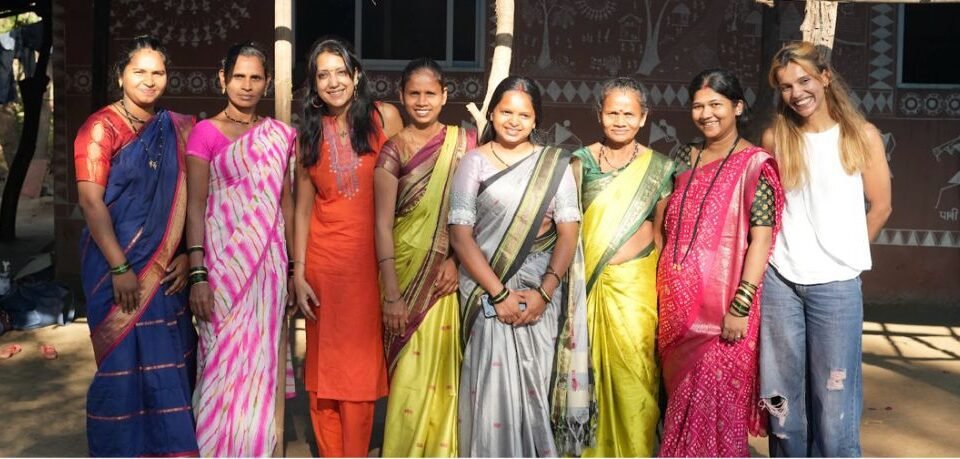
Last week, team Green Pistachio visited the interiors of Aarey Forest, a place that most Mumbaikars are familiar with only in terms of news headlines about growth, deforestation, and substructure plans and conflicts. However, there is a world beyond all this, and that world has 27 tribal Padas (villages) within the Aarey Forest, and there is a healthy Adivasi population of more than 6,000 people who live in this forest.
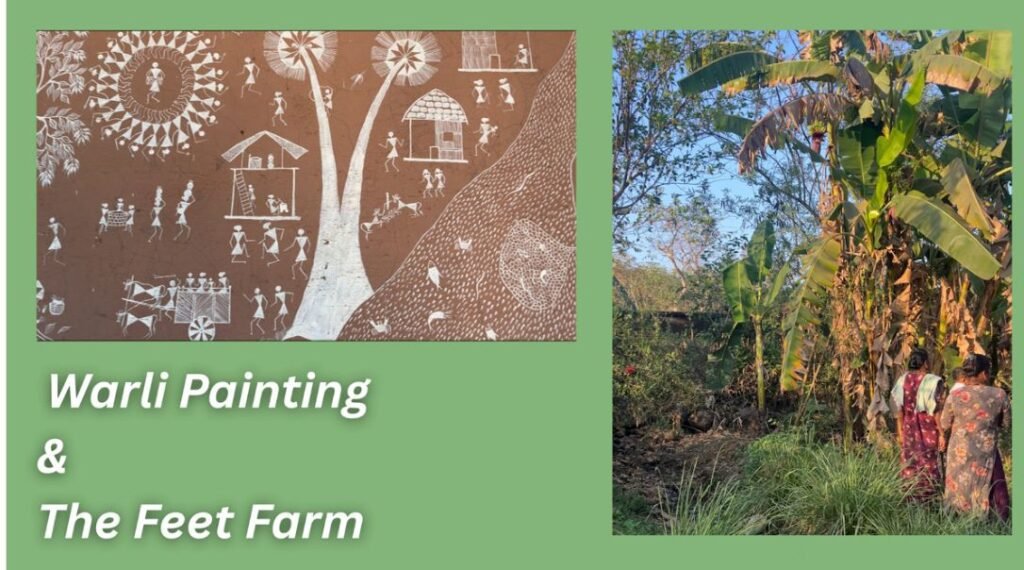
At Maroshi Pada, one of the tribal villages in Aarey Forest, we entered a house, and immediately one could sense the warmth and sense of self-identity. The house had traditional Warli paintings depicting various designs, which told their stories in their own way, depicting the beauty and calmness of nature. Outside, the family had their own flourishing vegetable garden, which they referred to as their “feet farm,” which is cultivated and maintained by their own efforts.
Inside the kitchen, we found a newly installed smokeless cookstove, built under the guidance of the Smokeless Cookstove Foundation (SCF), which would soon be put to regular use. At present, the traditional chulha was still burning, and smoke was filling the air as the meal was being prepared. Wood was still the major fuel source, but the scene depicted a shift from the traditional and conventional to a healthier and more sustainable way of cooking.
A Stove That Redesigns the Flame and the Women Behind it
The Smokeless Cookstove Foundation (SCF) provides hands-on training programs to communities to develop mud chulhas using Rocket Stove technology, which are zero-cost, highly efficient, and smokeless. This organization is led by Nitisha Agrawal, a former communications professional who worked with companies like Volkswagen and Skoda Auto, and quit her corporate job in 2016 to set up SCF. Nitisha used her experience as a communications professional and her training in sustainable development to transform a simple stove into a community-led movement to combat climate change and save lives. In this stove, there’s a secondary oxygen hole in the burn chamber that enables better combustion by allowing the fire to reach extremely high temperatures, burning all smoke particles, resulting in clean, smokeless operation.
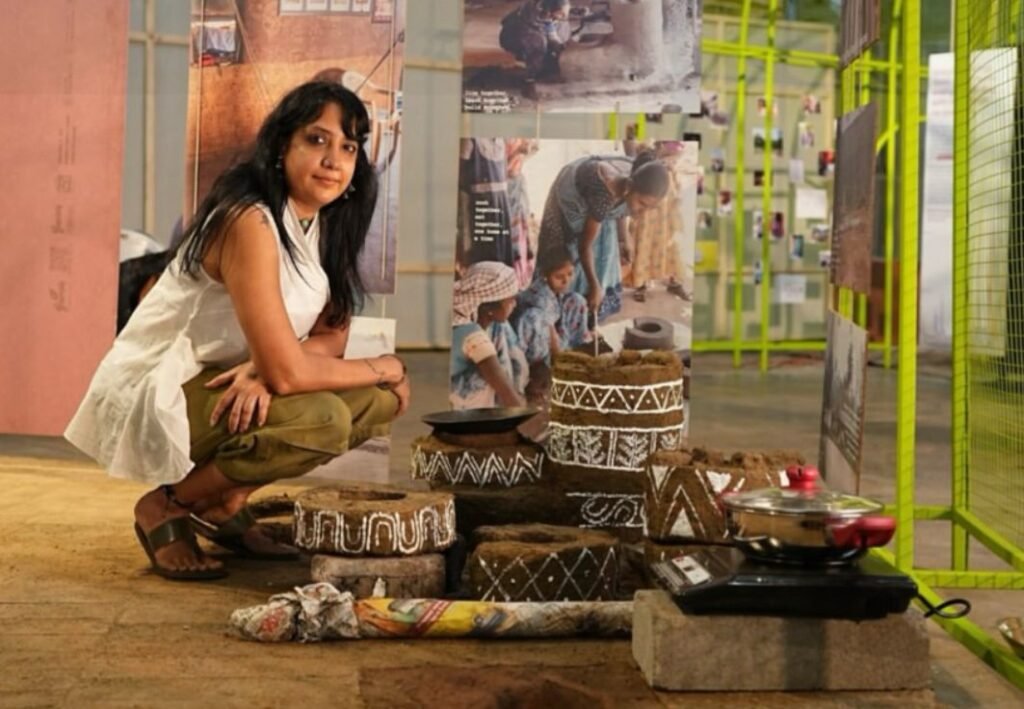
Since the fuel burns more efficiently, less wood is consumed, and the dual burner design allows women to cook two dishes at once using the same bunch of firewood. Made of readily available materials like Mud or clay, Cut dry grass, Rice puffs, cow dung, and bricks. The stove is not donated to the community but built by them. Since the inception of SCF, this model has been replicated in nine states of India, covering close to 80 districts and villages, and impacting more than 1,000 families. At Maroshi Pada, close to 30 Adivasi women were trained on the model in 2020, and within a matter of hours, 12 chulhas were installed. The lockdown notwithstanding, the organization returned to the area and installed stoves at the residence of tribal leader Vanitha Thackeray, who gave the organization glowing reviews.
Listening to the Women of Aarey: Identity and Empowerment
However, in our conversations in Aarey, these women are not just passive recipients, but are very aware of their surroundings. They talked about deforestation, the changing rainfall, and more. They know their survival is directly linked to the health of the forests. These women can arguably be termed climate leaders, even if they are not often thought of in those exact terms. Cooking is not just cooking in this place; women’s health is directly impacted by the haziness in their kitchens. The more the haze is lifted, the better their health, and the easier their lives become.
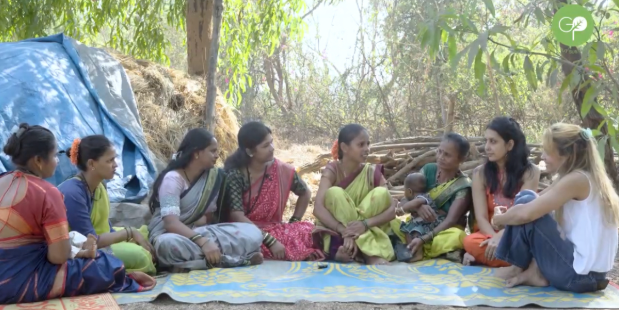
The Adivasi tribes in Aarey are caught between tradition and development, yet they hold on to their identity. The Rocket chulha is effective because it enhances tradition, without replacing it. When women construct and own the chulhas, they shift from the category of users to that of decision-makers. Women’s empowerment is not loud, but it is powerful, based on their health, their dignity, and their ability to create their own destiny.
A Cleaner Flame, A Broader Vision
The smokeless chulha may not be a gaudy product, but it is simple, accessible, and deeply rooted in the culture.
As we walked away from the Aarey Forest, we realized that development is often gauged by the roads and buildings that are constructed, but sometimes, real development is gauged by the air that people breathe, the firewood that people save, and the women who smile instead of cry in their kitchens.
The initiative continues to grow through community participation and the support of donors who believe in sustainable, grassroots solutions. Every contribution helps expand training programs, reach more households, and strengthen women-led change, proving that even a simple flame, when made cleaner, can illuminate a much broader future.
Corporate support can help scale this work where it matters most. By partnering with Smokeless Cookstove Foundation, you can directly contribute to cleaner kitchens, improved women’s health, reduced fuel consumption, and community-led climate action.
CSR partnerships can support:
- Training Adivasi women to build and maintain smokeless cookstoves
- Expanding installations across tribal padas in Aarey and beyond
- Strengthening women-led livelihoods and local capacity
- Delivering measurable impact across health, environment, and gender equity
This is an opportunity to invest in a proven, grassroots solution- one that delivers long-term social and environmental returns.
To explore CSR partnerships or support this initiative, reach out to us at collab@3cents.media.
About the Author

Kiara Rodrigues is a Mass Media student who has been drawn to storytelling since the 10th grade. She began working professionally six months ago, and that experience has only strengthened her love for the field. Through her work, she aims to explore stories that create impact and use media as a tool to inform, engage, and inspire. She is determined and focused on learning new lessons in sustainability daily with immense enthusiasm. Her visit to Aarey Forest helped her realize how a small impact can make a big difference in climate action and building a sustainable future.