Reasons For Wildlife Entering Cities: The Truth About Urban Expansion
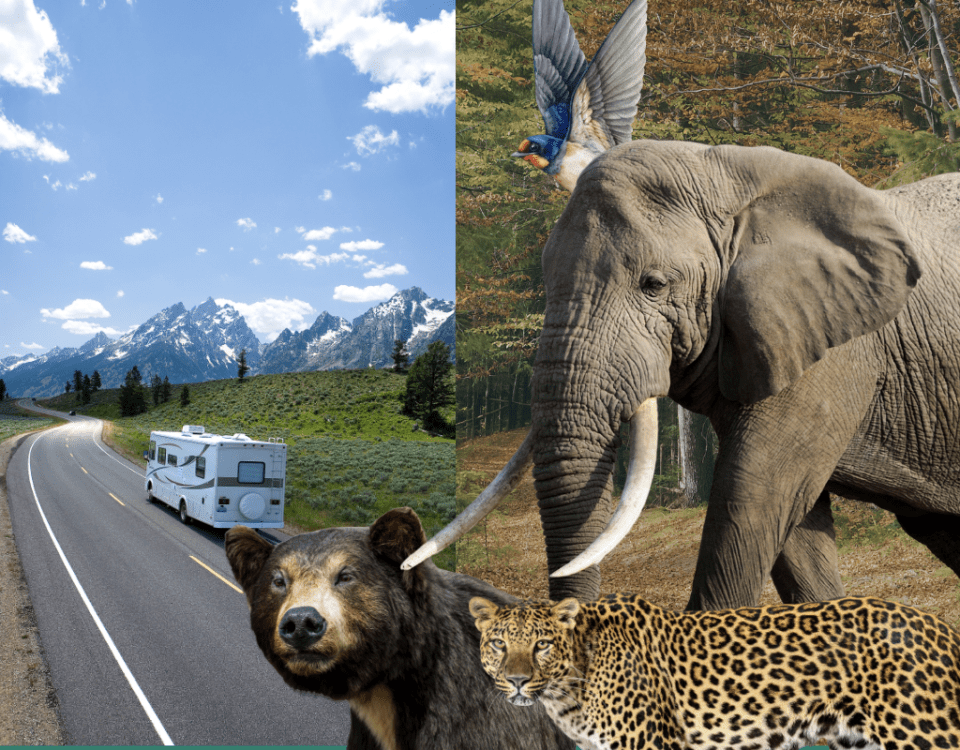
A leopard takes a casual night walk through a residential lane in Mumbai.
An elephant pauses traffic on a national highway like it owns the schedule.
A bear drops into a village, apparently checking what’s on the menu.Not rare anymore. Not surprising either.And right on cue, we say,
“Wildlife is coming closer.”
Of course. Because urban chaos was clearly on their bucket list.
But that skips a slightly uncomfortable question.
Are they really coming closer, or are we just going further in?
Over the past few years, India has seen a steady rise in human wildlife interactions. Leopards have been spotted multiple times in Mumbai’s Aarey region and even within city limits.
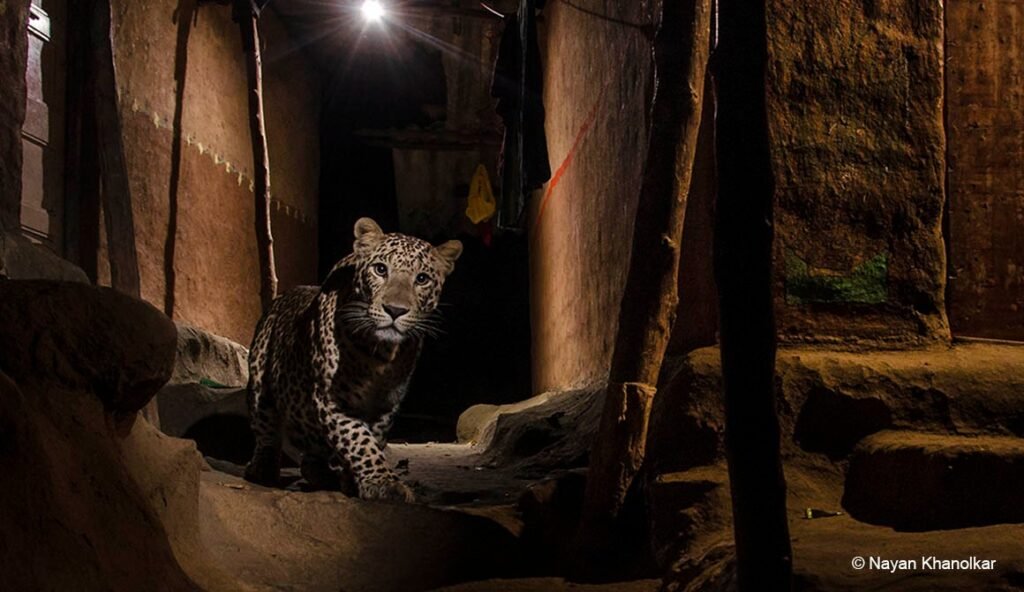
Source: https://www.nhm.ac.uk/discover/mumbais-leopards-caught-on-camera.html
Credit: Nayan Khanolkar
In 2023, a leopard sighting in Bengaluru triggered widespread concern.
In Odisha and West Bengal, elephant corridors continue to overlap with highways and rail tracks, leading to frequent encounters and casualties.
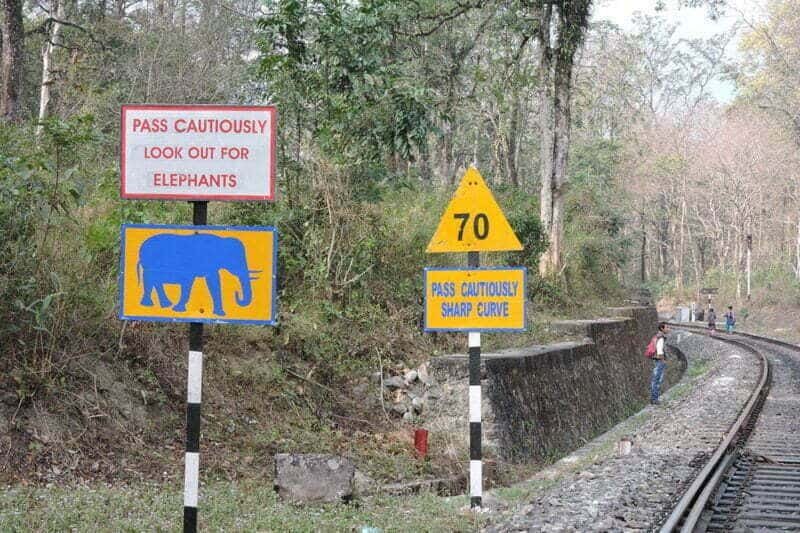
Source: IEF
In Karnataka and Tamil Nadu, elephant movement across the Nilgiri landscape often intersects with roads, farms, and settlements, regularly leading to crop damage, human casualties, and retaliatory conflict.
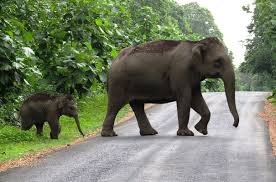
It looks dramatic. It feels unexpected.
It is neither.
What Changed? Quite a Lot, Actually.
Forests are shrinking.
Urban areas are expanding.
And entire food chains are quietly falling apart.
Trees go. Prey reduces.
Prey reduces. Predators move.
So when a leopard shows up in a city, it is not sightseeing.
It is adapting. Fast. For food!
According to India’s Forest Survey Report, forest cover may look stable on paper, but fragmentation tells a different story. Forests are now scattered patches trying to behave like ecosystems.
Movement gets restricted.
Hunting gets harder.
Survival gets unpredictable.
Elephants follow migration routes older than our infrastructure.
The routes stayed.
We built over them.
And then we call it conflict.
The Real Problem Is Not Visibility. It Is Overlap.
Across India, we keep shrinking forests, slicing up habitats, and carving roads through wildlife corridors — and then act utterly baffled when animals start showing up in human spaces.
A leopard in a village? Panic.
An elephant in a field? Headlines.
A bear near a road? Outrage.
As if the animals are the ones making unreasonable real estate decisions.
The reality is far less dramatic and far more inconvenient: when we fragment habitats, wildlife has fewer places to go. And when highways, mines, and expanding cities keep eating into forests, animals do the only thing they can do — adapt.
Apparently, (and ironically) that adaptation is what we call “conflict.”
Because nothing says irony quite like humans bulldozing through ecosystems and then accusing wildlife of crossing boundaries.
But the truth is, those boundaries disappeared the moment we decided every forest was available for development.
And, it’s not just the animals that are under pressure. As habitats shrink, tensions rise too — between communities, conservationists, developers, and everyone trying to “manage” the mess.
This isn’t just about isolated incidents or dramatic viral videos. It is part of a much larger pattern. Land system change and biodiversity loss are destabilising ecosystems everywhere, and human-wildlife conflict is one of the clearest signs that nature is under strain.
So when wildlife starts coming closer, it is not some random disruption.
It is not “nature invading.”
It is the predictable outcome of relentless environmental pressure.
Or, to put it plainly: if you keep taking away someone’s home, don’t act surprised when they turn up at your door.
Wildlife coming closer is not the problem.
It is the symptom.
And if we are still reacting with shock and acting like we had nothing to do with it, then we are missing the warning entirely.
Meanwhile, We Call It a “Sighting”
We document it.
We share it.
We react.
We rarely ask what caused it.
Mostly because the answer leads back to us.
So What Do We Actually Do About It?
This is where things sound wise and vague very quickly.
“Protect wildlife.”
“Save forests.”
Great. Still not a plan.
Here is what actually makes a difference:
1. Forest Regeneration and Protection
Planting trees helps. Keeping existing forests intact helps more. Doing both together is what restores habitats and stabilises entire food chains.
2. Conservation That Works in Reality
Wildlife corridors, buffer zones, and protected areas need to function on the ground. Animal movement depends on continuity, not documentation.
3. Smarter Urban Planning
Cities expand into forests, and then we act surprised by the consequences. Planning with ecological boundaries reduces that friction before it escalates.
4. Responsible Waste Management
Open waste creates easy food sources. Easy food creates repeat patterns. At some point, it stops being accidental and becomes predictable.
5. Community Awareness
Panic escalates situations. Awareness reduces them. Simple response protocols can prevent unnecessary harm on both sides.
6. Policy and Corporate Responsibility
Land use decisions shape ecosystems at scale. Ignoring biodiversity does not eliminate conflict. It simply delays it.
If you look at how businesses are already beginning to shift, as discussed in our Profit to Planet Pivot series, sustainability is no longer an optional positioning. It is becoming an operational necessity.
The Question Is Not Who Is Invading Whom
Wildlife is adapting to a system that is changing around it.
The real question is simpler.
How far are we planning to go, and what does that leave behind?
At Green Pistachio
We work with organizations to build sustainability strategies that go beyond surface-level intent and address real environmental challenges, including land use, biodiversity, and responsible expansion.
If your work intersects with infrastructure, urban development, or environmental impact, this is where better decisions start. If you’re unsure where to begin, reach out to us—we’ll help you get started. You can also visit our website to explore more.
Because the problem is not that wildlife is coming closer.
It is that we are still moving forward like nothing is changing.
Even when everything is.