The Interesting Truth About Being Open To Reusable Period Panties
Asking every woman to switch to reusable period panties overnight is a little like asking the world to go vegan by Monday.
The intention may be good.
The expectation probably isn’t.
Over the past decade, conversations around menstrual products have become surprisingly polarised. Pads versus cups. Tampons versus period panties. Disposable versus reusable. Sustainability versus convenience. Now, menstrual care has become a debate about choosing sides, as though one product had to replace every other.
But periods don’t work that way.
A teenager navigating their first cycle, a nurse working a 12-hour shift, a professional travelling every week, a marathon runner, a farmer spending long hours in the field and someone living in a region with limited access to clean water are not solving the same problem.
So why should we expect them to use the same solution?
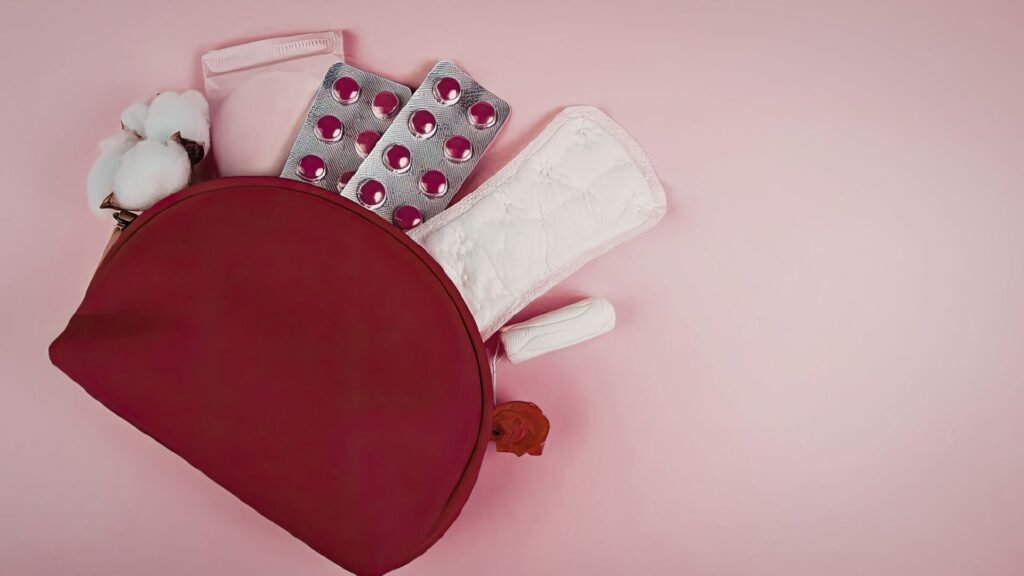
Perhaps it’s about understanding where they fit into a much larger menstrual toolkit, where different products solve different needs rather than compete with one another.
Why does every new menstrual product begin with scepticism?
If you’ve ever heard someone say, “Period panties can’t possibly work,” you’re not hearing a new argument.
You’re hearing a very old one.
When disposable pads were introduced decades ago, many questioned whether they were safe. Tampons faced resistance over comfort, health concerns and cultural misconceptions. Menstrual cups were dismissed as impractical long before they became mainstream.
Reusable period panties are simply the latest innovation to go through the same cycle of doubt.
Interestingly, reusable menstrual products themselves are not new. Across cultures, women have reused cloth for generations. What changed isn’t the idea. It’s the engineering.
Today’s reusable period underwear combines multiple fabric technologies, including moisture-wicking layers, highly absorbent cores, leak-resistant barriers and breathable outer fabrics designed to hold different flow levels while remaining discreet.
Yet the questions remain remarkably familiar.
Do they leak?
Do they feel bulky?
Are they hygienic?
Most of these concerns don’t come from experience.
They come from imagination.
Separating myths from engineering
The biggest misconception about reusable period panties is that they’re simply regular underwear with extra fabric stitched inside.
Modern designs are considerably more sophisticated.
Depending on the brand, multiple layers work together to absorb fluid, lock moisture away from the skin, minimise odour and reduce leakage. Different absorbency levels are designed for spotting, moderate flow, heavy flow and overnight protection, much like pads are available in different sizes.
This is why asking, “Do period panties leak?” is a little like asking whether pads leak.
Any menstrual product can fail if it exceeds its intended capacity. The more relevant discussion is whether the product matches the user’s flow and lifestyle.
Comfort is another common concern, largely because absorbency is often associated with bulk. The comparison to diapers comes from the assumption that greater protection must automatically mean thicker products.
Modern period panties are engineered differently. Because the absorbent layers are integrated into the garment itself rather than attached separately like a disposable pad, many users report less bunching, shifting and friction during movement, making them feel much closer to regular underwear than many first-time users expect.
Then comes perhaps the biggest concern of all.
Hygiene.
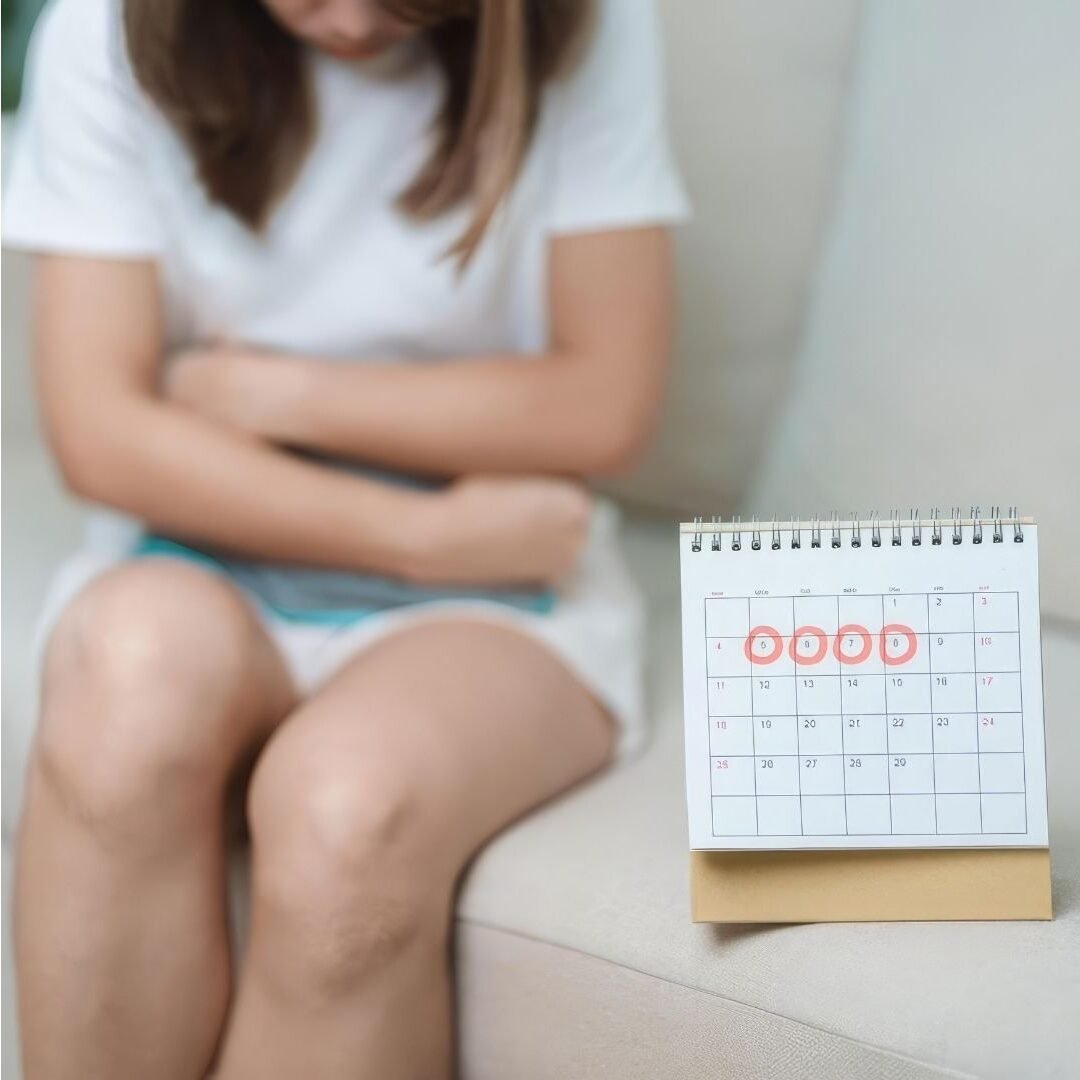
The World Health Organization notes that good menstrual hygiene depends on access to clean menstrual materials, water, soap and appropriate washing or disposal practices, rather than on one product category.
Reusable period panties are typically rinsed after use and washed according to manufacturer instructions before being reused.
In other words, hygiene depends less on whether a product is reusable and more on whether it is used and maintained correctly.
The comparison we’ve been getting wrong
Perhaps the biggest mistake in menstrual conversations is assuming products compete with one another.
They don’t.
They solve different problems.
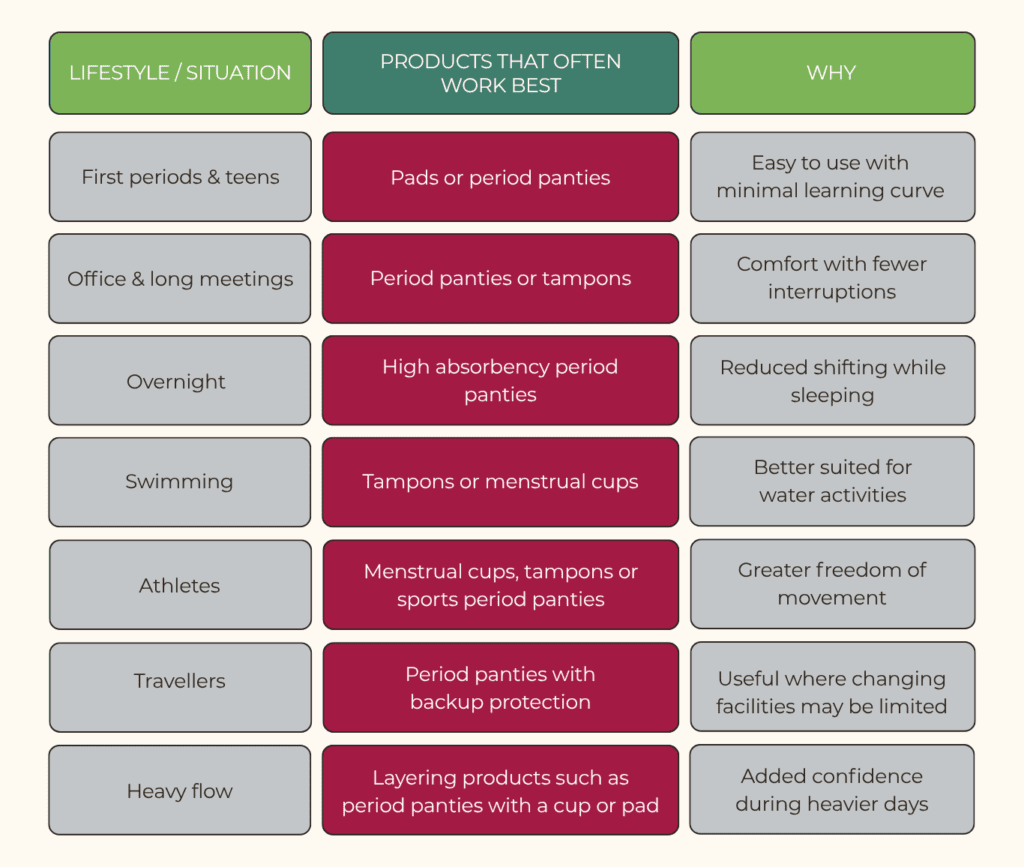
In many ways, the debate isn’t between reusable and disposable products. It’s between different priorities.
For some people, sustainability sits at the top of the list. For others, convenience matters more. Someone travelling frequently may prioritise products that require minimal washing. Someone with sensitive skin may value breathable fabrics. Someone experiencing heavy flow may choose products that offer greater confidence, regardless of whether they are reusable or disposable.
Neither approach is inherently right or wrong. They simply reflect different realities.
The future of menstrual care is unlikely to be built around one product.
It will be built around convenience.
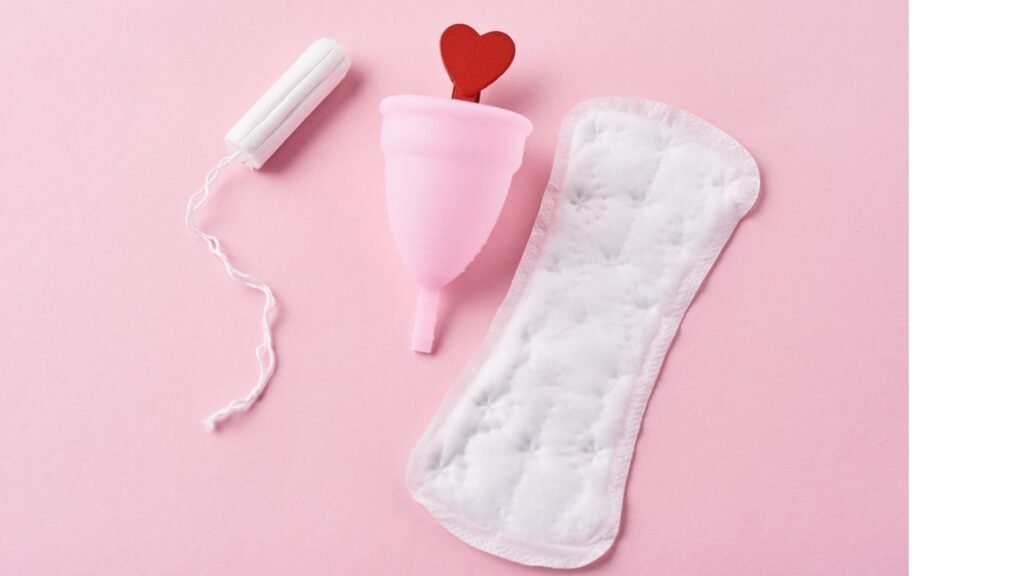
Reusable or disposable? The answer isn’t as simple as it sounds
From an environmental perspective, reusable products clearly reduce waste over time.
An average person who menstruates is estimated to use between 5,000 and 15,000 disposable menstrual products over their lifetime, depending on factors such as cycle length, product choice and reproductive years.
Many disposable pads contain plastic components, and because of this, they can take up to 500 years to break down in landfill conditions, contributing to long-term plastic pollution and the generation of microplastics
But sustainability is not simply about what we buy. It’s also about how we use it.A reusable product purchased because it is trending but rarely used achieves very little environmentally.
Sustainability isn’t determined by whether a product is reusable or disposable alone. It depends on its entire lifecycle and, most importantly, whether it is actually used (and disposed) as intended.
Economics tell a similar story.
Reusable period panties generally require a higher upfront investment but can lower long-term spending when used consistently. Disposable products spread that cost over time, making them more accessible initially but often more expensive across years of regular use.
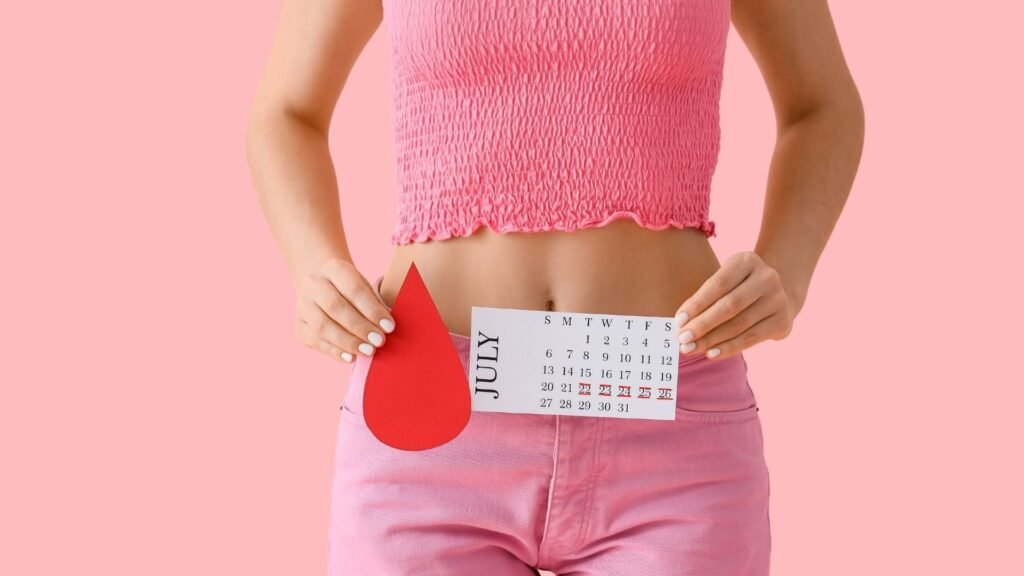
The sustainability conversation often assumes everyone has the same choices
One of the unintended consequences of sustainability campaigns is that they sometimes confuse possibility with accessibility.
Can reusable products reduce waste?
Absolutely.
Can everyone who menstruates realistically switch tomorrow?
Probably not.
Because menstrual choices are shaped by far more than personal preference.
They are shaped by circumstance.
- Reliable access to water, which makes regular washing practical.
- Private sanitation facilities, especially for people sharing toilets or bathrooms.
- Housing and living conditions, where shared accommodation, limited drying space or lack of privacy may make reusable products difficult to manage.
- Occupation and working conditions, where long shifts, outdoor work, healthcare, factories or frequent travel may make managing reusable products difficult.
- Affordability, since the higher upfront cost can remain a barrier even when long-term savings exist.
- Social stigma, which still discourages many people who menstruate from openly washing or drying menstrual products.
- Menstrual poverty, where access to any safe menstrual product remains a challenge before sustainability even enters the conversation.
This is why expecting everyone who mensto switch overnight is a little like expecting every household to install solar panels tomorrow.
The benefits may be real. The barriers are too.
The future isn’t one product. It’s more choice.
The global feminine hygiene market is estimated to be worth around USD 35–37 billion in 2025–2026 and continues to grow as manufacturers invest in reusable products, organic materials and new menstrual technologies to meet changing consumer preferences.
That growth tells us something interesting.
That it isn’t entirely about eliminating products. It’s diversifying them.
Some people will continue using disposable pads because they suit their circumstances. Others may combine reusable period panties with menstrual cups. Some may use reusable products only overnight.
Others may reserve them for travel or lighter flow days. The real shift isn’t from disposable to reusable.
It’s from one-size-fits-all thinking to lifestyle-driven menstrual care.

Perhaps openness matters more than switching
Reusable period panties don’t need to replace pads.
Pads don’t need to disappear because menstrual cups exist.
And menstrual cups don’t make tampons obsolete.
The interesting truth about reusable period panties is that they don’t ask anyone to abandon everything they’ve used before.
They simply expand the choices available to people who menstruate. And perhaps that’s the biggest innovation of all.
Not persuading every woman to make the same choice. But making sure everyone has enough choices to make the right one for themselves.
Because menstrual care was never about one product or another. It was always about giving people more ways to manage their periods with dignity, comfort and confidence.
Every period is different. Every lifestyle is different.
So why should every choice be the same? Explore your options, stay informed and choose what works for you. If this article offered a fresh perspective, share it and help make menstrual conversations more informed, inclusive and stigma-free.