
Empower Rural Development For Better Opportunities And Future Ready Youth
Twenty years ago, India passed a law that changed everything for rural families: the right to a guaranteed job. Since then, MGNREGS has been the ultimate safety net, helping millions of families put food on the table, skip the stress of moving for work, earn a respectable livelihood, and actually plan for tomorrow. On this World Rural Development Day, we reflect on the scheme’s monumental achievements over the past two decades and examine the critical challenges and reforms needed to sustain rural livelihoods for decades to come.
When we think of rural development, agriculture often steals the spotlight. But the UN’s vision goes much further—embracing education, decent work, digital inclusion, and opportunities that help rural communities build resilient futures. That’s exactly where MGNREGS fits into the puzzle. It shows how a job guarantee can kickstart a community’s resilience. And bringing that bigger picture to life is exactly what World Rural Development Day is all about.
MGNREGS – Mahatma Gandhi National Rural Development Employment Guarantee Scheme
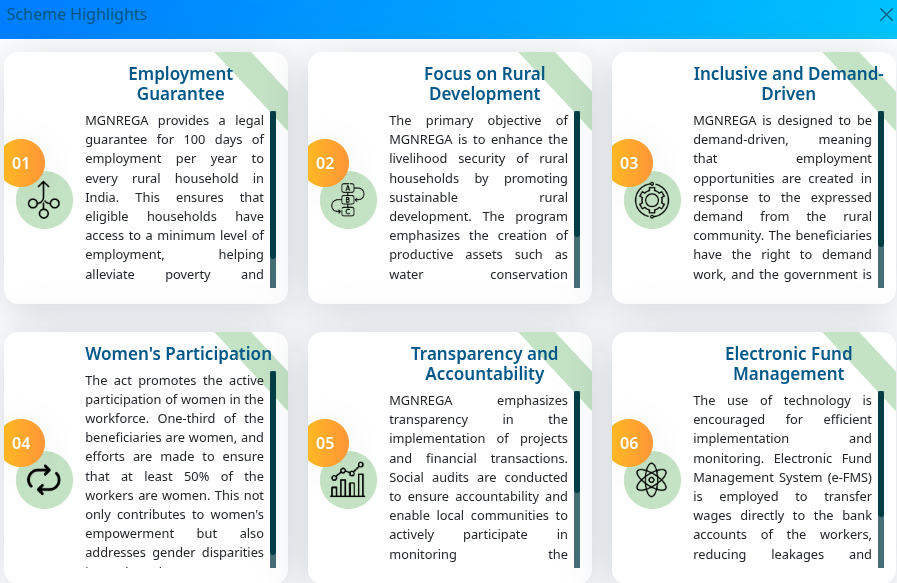
Introduced in 2006, the Mahatma Gandhi National Rural Employment Guarantee Scheme (MGNREGS) set out with a simple promise—100 days of guaranteed wage employment every financial year for rural households whose adult members are willing to undertake unskilled manual work. Over the years, it has become much more than an employment scheme.
By prioritizing vulnerable communities, including Scheduled Castes, Scheduled Tribes, women-headed households, and other marginalized groups, it has helped millions of families secure a steady source of income while reducing seasonal unemployment and financial uncertainty.
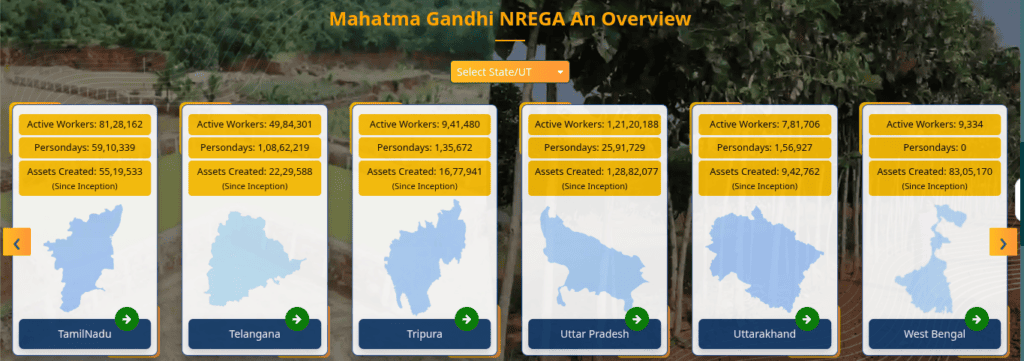
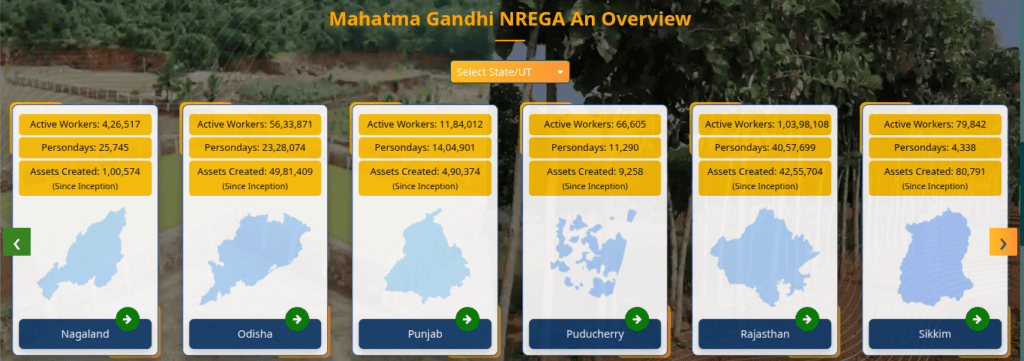
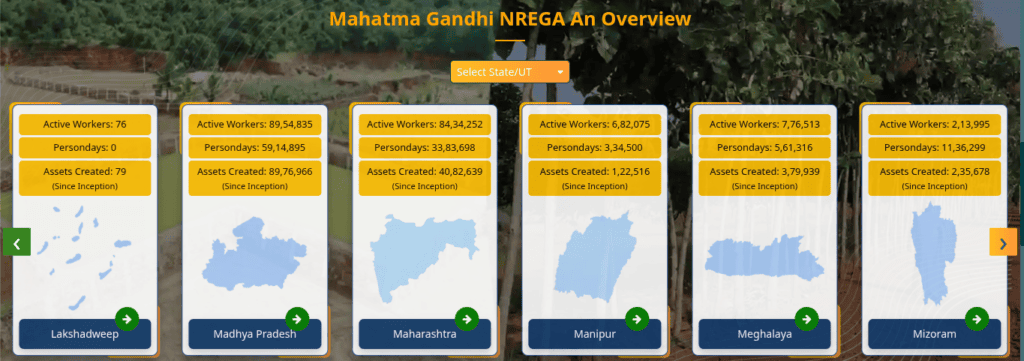
Source: Data from MNREGA Website
Nearly two decades after its launch, MGNREGS has become a cornerstone of rural livelihoods in India. According to its official dashboard, the programme has:
- 10.99 crore active workers
- 9.84 crore assets created since inception
- 9.11 crore person-days generated in the current financial year
- 2.06 crore Direct Benefit Transfer (DBT) transactions
- 75 lakh households benefited in the current financial year
The scheme has now entered a new chapter on 1 July 2026, when MGNREGS was replaced by the Viksit Bharat–Guarantee for Rozgar and Ajeevika Mission (Gramin), or VB-G RAM-G.
Here’s a look at what VB-G RAM-G gets right—and the concerns that need to be addressed for it to deliver on its promise.
What’s Better on Paper?
Beyond the name change, VB-G RAM-G attempts to reimagine rural employment through a range of policy and implementation reforms.
- Higher employment guarantee: Rural households are now eligible for 125 days of work, up from 100 days under MGNREGS.
- Higher wages: Daily wages have been increased by an average of over 10%, giving workers a better income cushion against inflation.
- Climate resilience gets a sharper focus: While MGNREGS permitted a broad range of climate-related activities, VB-G RAM-G reorganises them into 318 permissible works under four thematic domains—Water Security, Core Rural Infrastructure, Livelihood-related Infrastructure, and Extreme Weather Mitigation. This shift aims to make climate adaptation and resilient infrastructure central to rural employment planning, rather than just one category of work.
- Data-driven village planning: While MGNREGS relied on Gram Panchayat-led planning, VB-G RAM-G strengthens it through mandatory Viksit Gram Panchayat Plans (VGPPs) and geospatial tools like PM Gati Shakti and Yuktdhara, enabling projects to better address local infrastructure and climate needs.
- Digital-first implementation: VB-G RAM G introduces AI-enabled analytics, biometric authentication, real-time dashboards, spatial technology-enabled planning, mobile-based monitoring, and strengthened transparency mechanisms to support accountable and effective rural development.
The reforms are promising. Now it’s time to see the results on the ground.
What are the Concerns?
- Balancing demand and budgets: While MGNREGS was largely demand-driven, VB-G RAM-G introduces annual normative allocations linked to state labour budgets and village plans. While this could improve financial planning, experts caution that fixed budgets may struggle to accommodate sudden spikes in demand during periods of rural distress.
- Higher fiscal burden: Under VB-G RAM-G, most states now share programme costs in a 60:40 ratio with the Centre, replacing MGNREGS’ Centre-heavy funding model. This could make it harder for fiscally constrained states to meet rising employment demand.
- Transition challenges: Several policymakers and parliamentary committee members had called for a phased rollout, warning that a sudden transition could disrupt livelihoods if administrative systems are not fully prepared.
Recognising these gaps early can help strengthen the scheme and build a stronger foundation for rural development.
Rural Development: The Road Ahead
While the government lays the foundation, creating sustainable rural livelihoods cannot be a public-sector effort alone. Corporates can partner with Gram Panchayats and local institutions through CSR and ESG initiatives to:
- Co-create livelihood programmes
- Strengthen rural infrastructure
- Support skill development
- Invest in climate-resilient value chains
- Provide employment opportunities for rural youth
- Support education and digital inclusion initiatives
And the benefits could flow both ways. As the scheme strengthens rural infrastructure and livelihoods, businesses will gain access to a more skilled, stable and locally rooted workforce. After all, rural development isn’t just about creating jobs—it’s about building ecosystems where people can live, work and prosper, enabling communities and businesses to grow together.
World Rural Development Day: Beyond Today’s Jobs
The true success of VB-G RAM-G won’t be measured by the number of jobs it creates alone. It will be reflected in the aspirations it nurtures—young people choosing to build their futures in their own communities, families finding greater economic security, and villages becoming centres of opportunity rather than migration. Turning this vision into reality is a shared responsibility that calls for every stakeholder to act.
How can policymakers, industries, and local bodies work together to create more meaningful and sustainable livelihood opportunities for rural youth? Join the discussion below and share your ideas for shaping the future of rural livelihoods.
References:
- https://economictimes.indiatimes.com/news/economy/policy/new-rural-job-scheme-vb-g-ram-g-pays-10-more-than-mgnrega/articleshow/132124204.cms?from=mdr
- https://vbgramg.dord.gov.in/vbgramg/WriteReaddata/data/FAQ_English_VB-G_RAM_G_Notification_DayMay11,2026.pdf
- https://static.pib.gov.in/WriteReadData/specificdocs/documents/2025/dec/doc20251222741501.pdf
- https://www.newindianexpress.com/india/2026/May/11/vb-g-ramg-to-replace-mgnrega-from-july-1-parliamentary-panel-chief-seeks-phased-transition