IPL’s Green Dot Ball: Is It Really Promising Climate Hope?
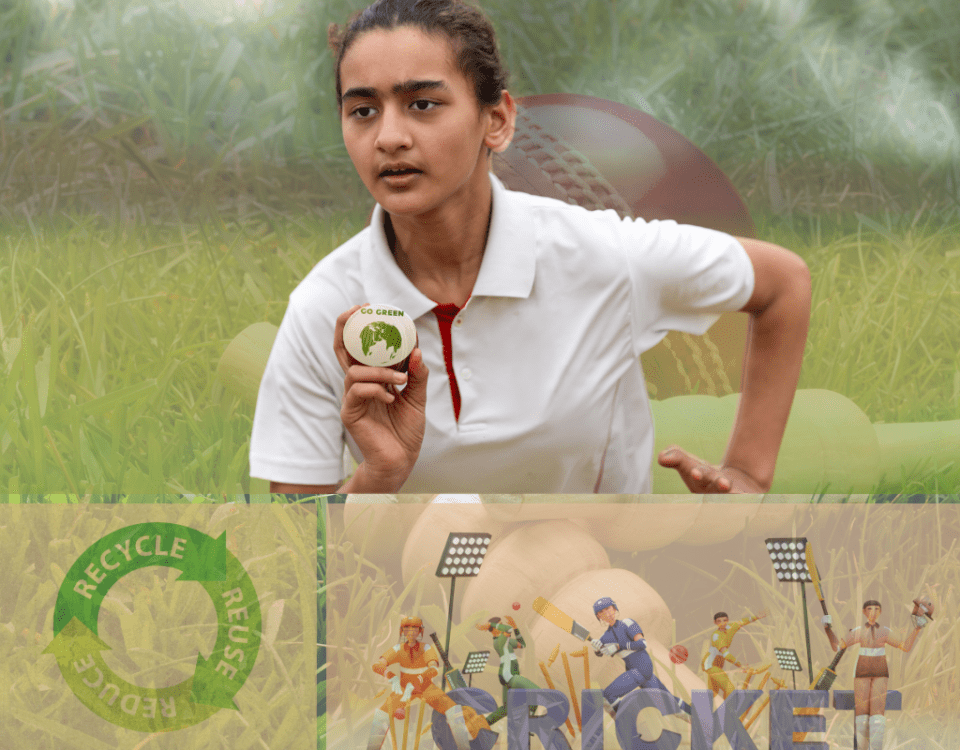
In India, cricket has a remarkable ability to make almost anything go viral. Whether it’s a brand, a campaign, or a social cause, attach it to the game, and millions are instantly paying attention. So when the Green Dot Ball initiative stepped onto the pitch, sustainability found itself at the centre of Indian cricket’s biggest spotlight. On paper, the idea is simple: every dot ball contributes to a greener future. Or is it just what they want you to believe? Because beyond the green branding and feel-good messaging lies a bigger question — one that separates genuine impact from clever marketing.
Last year, we followed the trail of the Green Dot Ball initiative and went searching for the trees. Avnee and Zaarah put on their detective hats, trying to understand what happens after a dot ball is bowled. Their investigation highlighted a simple truth: when it comes to sustainability, transparency matters just as much as the promise itself.
This year, we’re looking beyond the trees and investigating what else comes with the campaign — from merchandise and messaging to the environmental footprint left behind.
IPL 2026: The Green Dot Ball Campaign Gets a Makeover

Unlike previous editions that focused largely on dot balls and tree plantations, this year’s campaign adds a new layer of fan participation. Through the #SpotAnyGreenDot contest, a joint initiative by the Organizers and the Board of Control for Cricket in India (BCCI) for the Tata WPL/IPL 2026 season, participants are encouraged to hunt for green circles, spheres, ovals, or just about any round green object they can find, snap a photo, and share it on the contest platform or social media using the campaign hashtag.
Suddenly, a tennis ball, a lime, a bottle cap, or even a traffic light can become part of a sustainability campaign. The more green dots you notice, the more connected you feel to the movement. It succeeds in making green dots impossible to ignore. Whether it makes environmental impact equally visible is another story.
And of course, no fan contest is complete without a prize. Participants stand a chance to win IPL/WPL merchandise and match tickets. And that’s where this green story starts getting a little less green.
The Green Dot Ball Paradox
The Green Dot Ball initiative certainly gets people talking about sustainability. The question is whether it’s getting them any closer to it. And the deeper we looked, the more questions emerged.
- Reduce, reuse, recycle… and win a brand-new T-shirt? The initiative encourages fans to think green, but the reward is another product entering the consumption cycle. And every new product comes with its own environmental baggage — from raw materials and production to packaging and disposal. So the question is not just what fans win, but can we fight waste by creating more things to eventually throw away?
- What exactly is hiding inside that green merchandise? The contest tells us what winners get, but not much about what those products are made of. Are they recycled? Responsibly sourced? Designed for a long life? Or are we just hoping the word “green” does the heavy lifting?
- How many trees made it past the first over? The Green Dot Ball initiative claims to have helped plant over 6 lakh tree saplings across Assam, Kerala, Maharashtra, Gujarat, and Himachal Pradesh. But trees, unlike Instagram posts, don’t thrive on visibility alone. The true measure of impact lies not in how many enter the soil, but how many survive beyond it, how they are maintained, and what difference they make years later.
- Have we confused engagement with impact? Getting people to spot green dots and share pictures certainly creates conversations. But climate action cannot be measured only through likes, shares, and social media participation. The planet doesn’t run on hashtags (yet).
None of these questions invalidate the intention behind the initiative. But they do highlight an important reality: a campaign can be popular, engaging, and well-intentioned while still deserving scrutiny. Because when it comes to sustainability, intention is only the first step; impact is what truly matters.
What Could Have Made the Initiative More Impactful?

We’ve asked a lot of questions, so it’s only fair we offer a few answers. If every dot ball can inspire climate action, imagine what could happen if the rewards themselves were designed around environmental impact rather than merchandise.
For starters, every 500 dot balls could fund solar lighting in local cricket academies, training grounds, or community stadiums. It would reduce energy consumption while supporting the next generation of players.
Or every dot ball could also support waste collection and recycling drives in local communities, starting with the match venues. Instead of adding more products into circulation, the initiative could help divert waste away from landfills—creating an environmental impact that people can actually see.
Another possibility could be cricket equipment donation and refurbishment drives. Used bats, pads, gloves, helmets, and kits often sit unused long before the end of their functional life. The initiative could help collect, repair, and donate pre-loved equipment to young cricketers, schools, and NGOs—reducing waste while making the sport more accessible.
The conversation doesn’t have to stop here. Let’s bowl a few more ideas to make this initiative truly green.
The Other Side of Green
The Green Dot Ball initiative has done something important — it has brought sustainability into conversations that millions of people are already part of. And that visibility matters. But climate action cannot stop at awareness. The real challenge is turning attention into action, participation into behaviour change, and promises into measurable impact.
What’s your take on the Green Dot Ball initiative? A powerful step for sustainability or a green idea that needs more answers? Drop your thoughts below.