Can New ESA Regulations Protect the Vulnerable Western Ghats?
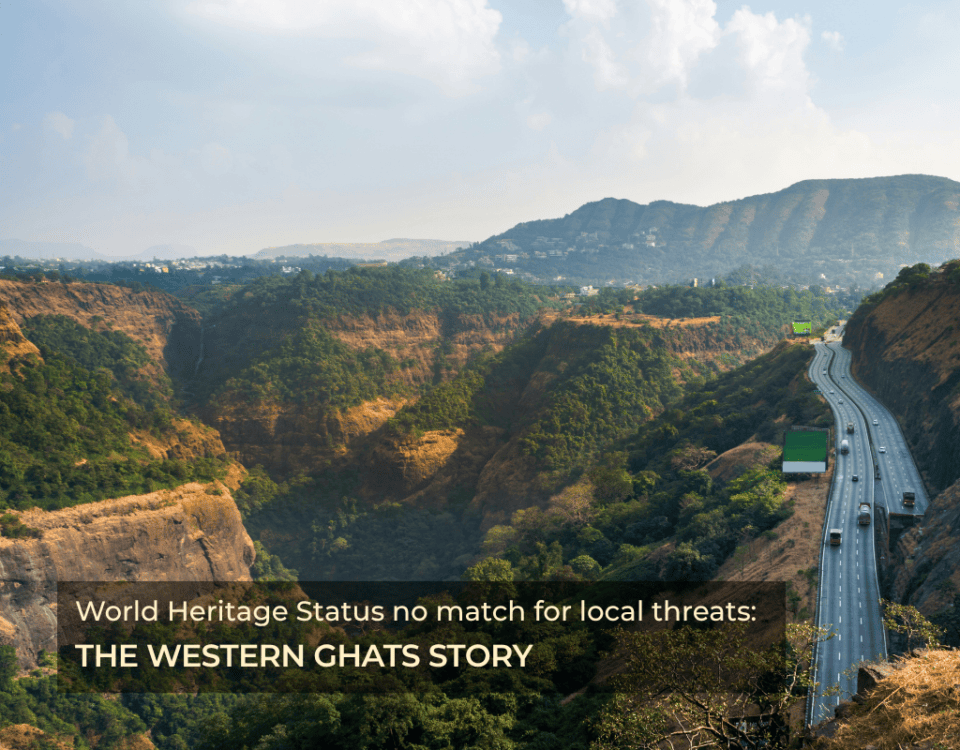
Imagine being one of the world’s 8 hottest biodiversity hotspots, earning UNESCO World Heritage status, and still having to worry about mining, deforestation, and sprawling development. That’s the Western Ghats for you. They have won global recognition but are still fighting local problems. That’s where the new Ecologically Sensitive Area (ESA) regulations come in—designed to safeguard the region by regulating the most environmentally damaging activities while allowing local communities to thrive. But can these new ESA regulations finally give the Western Ghats more than just another badge?
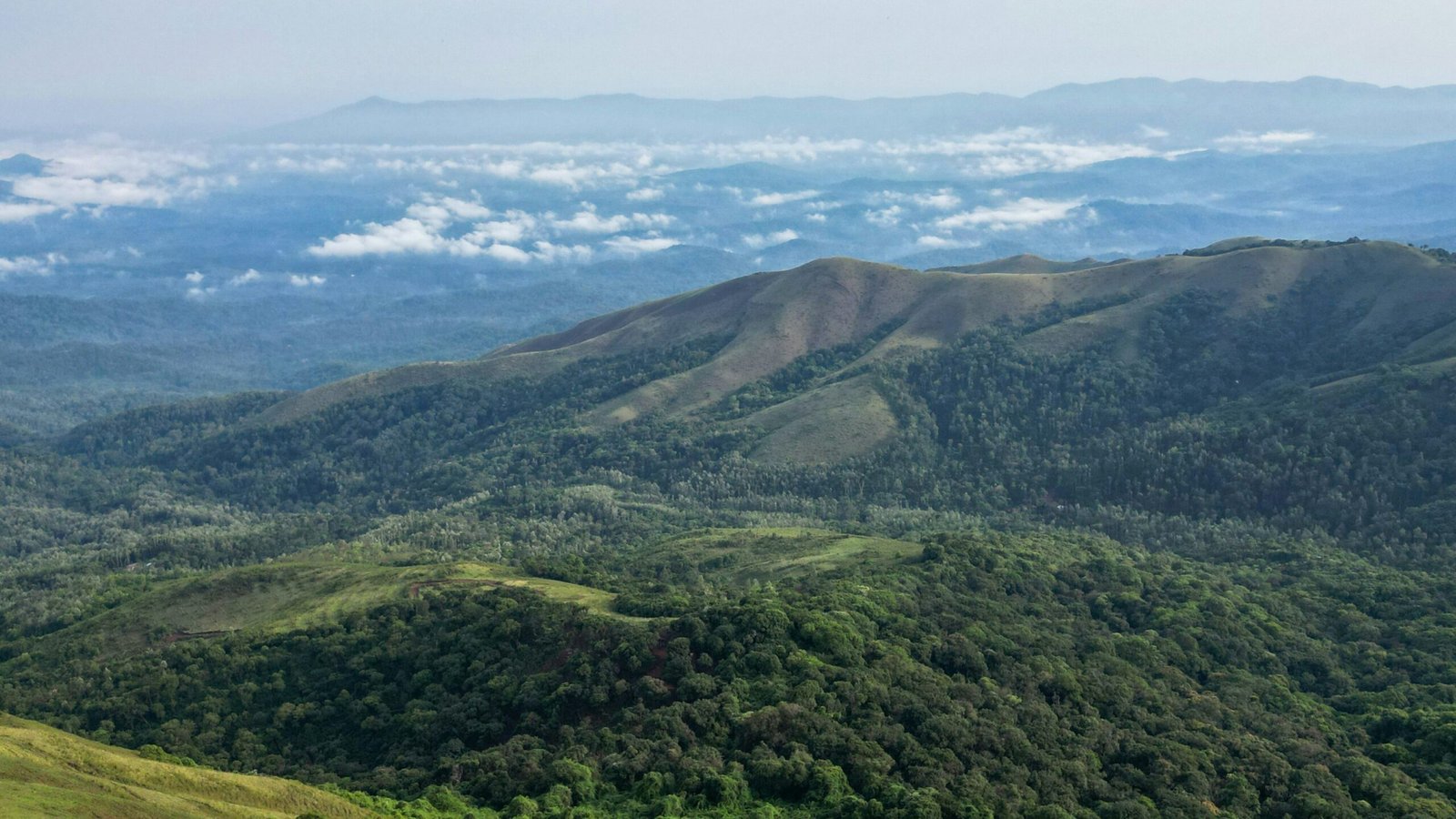
Most people visit the Western Ghats for the views—the misty mountains, cascading waterfalls, dense rainforests, winding rivers, and breathtaking hill stations, amazing tea and coffee plantations. But there’s much more than meets the eye. Many of the plants, amphibians, reptiles, and freshwater species found here are endemic to this region. If their habitats continue to shrink, these species won’t just disappear from the Western Ghats; they’ll disappear from the planet. Which means every decision made here echoes far beyond these mountains.
Why Do the Western Ghats Need ESA Regulations?
Research shows that between 2017 and 2019, the Western Ghats experienced a significant decline in Net Primary Productivity (NPP)—a key measure of ecosystem health and carbon absorption capacity.
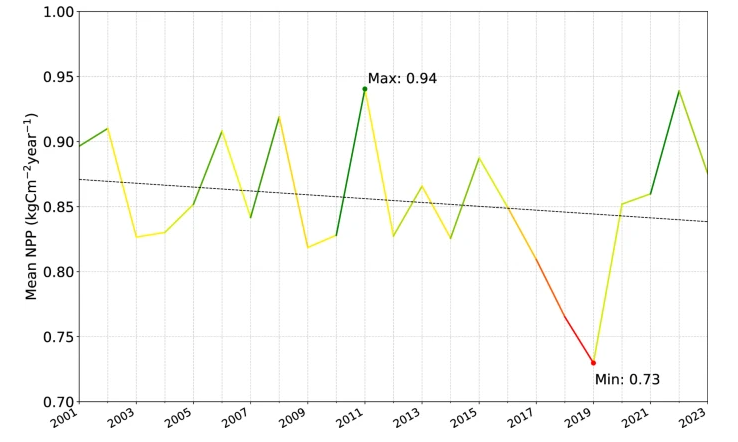
Source: The evolution of the mean NPP in the Western Ghats from 2001 to 2023
The Western Ghats are older than the Himalayas—around 150 million years old. They’re India’s biodiversity crown jewel—a nearly 1,600-km-long mountain range stretching across Gujarat, Maharashtra, Goa, Karnataka, Kerala, and Tamil Nadu. They’re home to at least 325 globally threatened flora, fauna, bird, amphibian, reptile and fish species. But here’s the thing—this ecological treasure is in trouble.
- The Western Ghats have already lost 58.22 sq. km of forest cover in just the last decade (2013–2023).
- Around 90% of grassland bird species in the Western Ghats have seen their numbers drop significantly.
- Another study recorded a nearly 35% decline in dragonfly and damselfly species in the Western Ghats.
- Forest loss and fragmentation have disrupted elephant migration routes, increasing human-elephant conflict.
- Rainfall patterns are becoming increasingly erratic, with lower average rainfall and more extreme downpours.
Every single one of these threats is exactly what ESA regulations are designed to slow down or stop.
Honestly Though, What is ESA?
ESA stands for Ecologically Sensitive Area—which is a fancy government way of saying: “This place is ridiculously special, so maybe don’t mess it up.”
Legally designated under the Environment (Protection) Act, 1986, an ESA is a zone where nature is especially fragile and valuable—boasting rich biodiversity, unique wildlife, dense forests, and crucial water sources that could be permanently damaged if human activities go unchecked. And the Western Ghats fit that description perfectly.
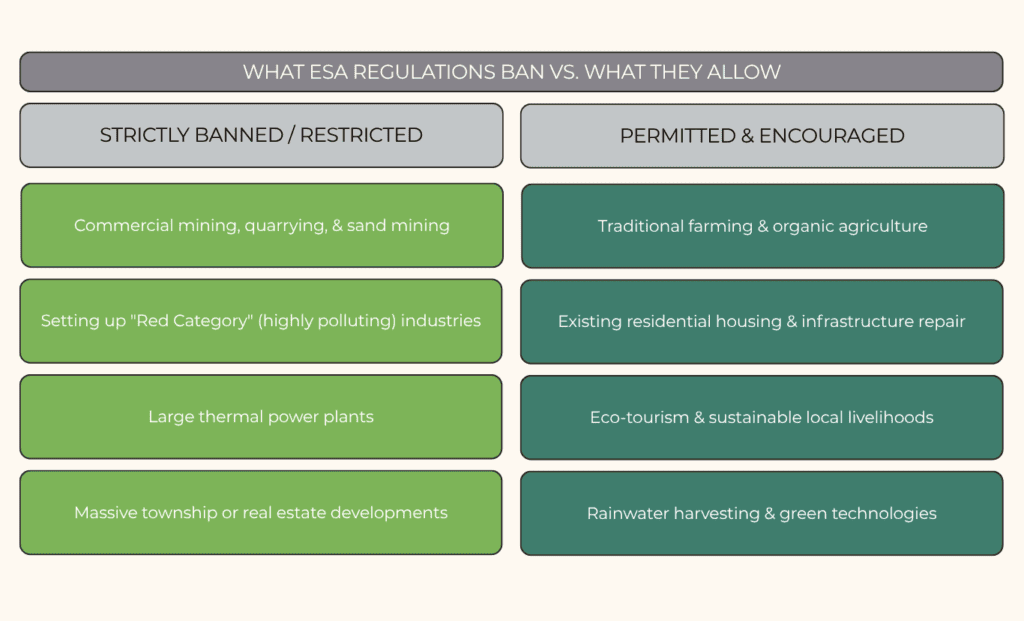
How ESAs Came into Existence?
Ironically, the story of the Western Ghats’ ESA regulations didn’t begin in the mountains. It began after the 1984 Bhopal Gas Tragedy, which led to stronger environmental laws and the birth of Ecologically Sensitive Areas to keep hazardous industries away from them.
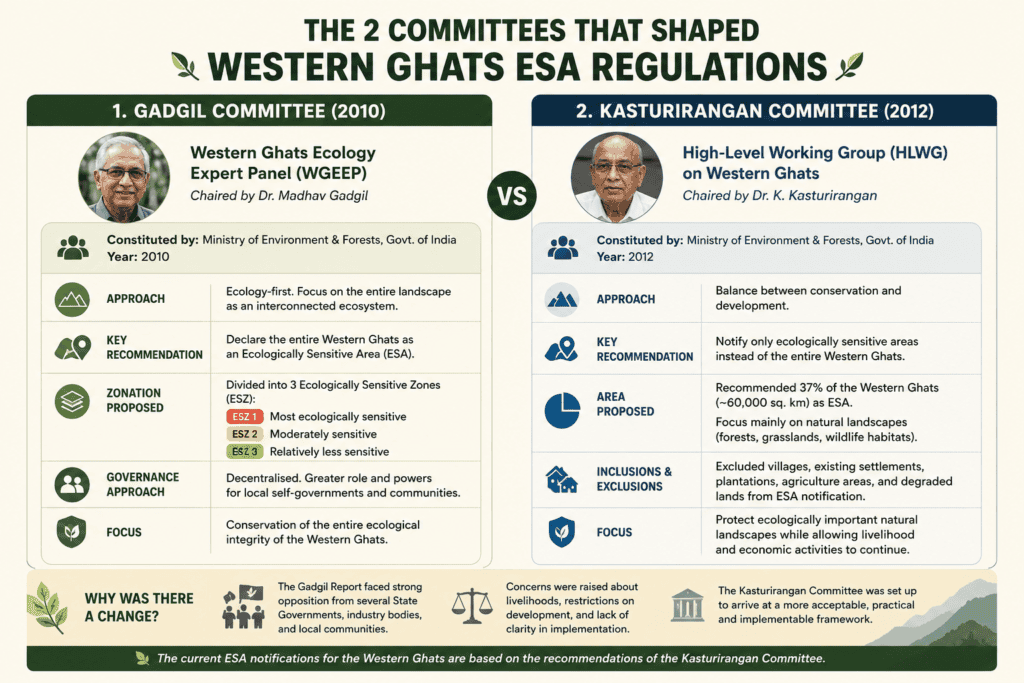
Source: AI-generated image
So… Can the ESA Regulations Save the Western Ghats?
After 15 years, two expert committees, six draft notifications, and endless debates, the story still isn’t over. Just this month, in July 2026, the Environment Ministry rolled out draft notification number seven. It proposes protecting over 56,000 square kilometres across six states, and it’s currently open for public feedback.
The draft is currently open for public comments and objections, which can be submitted to the Ministry of Environment, Forest and Climate Change (MoEFCC) through its consultation process (including the notified email esz-mef@nic.in) before the final notification is issued. This is one of those rare opportunities where citizens can directly shape an environmental policy.
So, can these new ESA regulations actually save the vulnerable Western Ghats?
The short answer? Yes—but only if they move beyond paperwork.
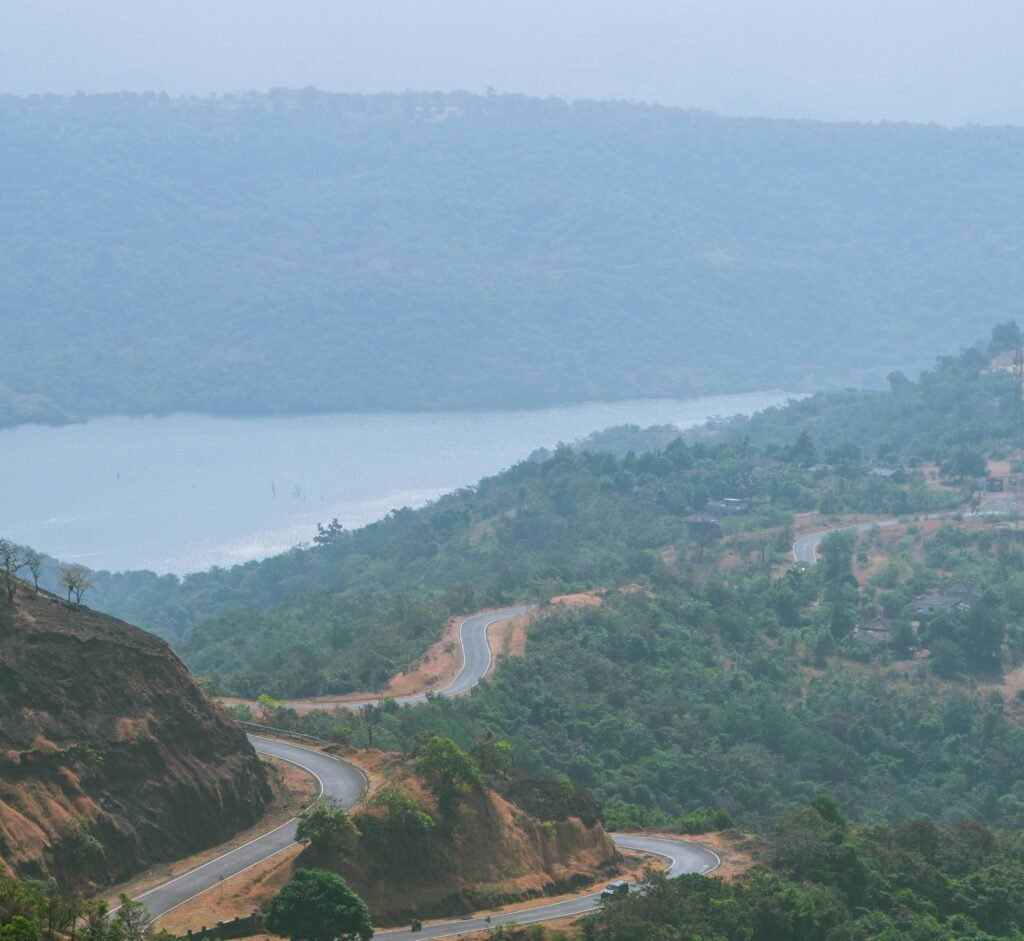
The new ESA regulations are one of India’s strongest attempts to protect the Western Ghats while allowing people to continue farming, living, and earning their livelihoods. But regulations are only as powerful as their implementation.
Governments need to enforce them without political shortcuts. Citizens need to respect them instead of finding ways around them. Businesses need to see the Western Ghats as more than just land for the next project and invest in conservation through responsible practices, CSR, and restoration efforts.
The Western Ghats have spent millions of years protecting us—with forests that store carbon, rivers that supply water, and ecosystems found nowhere else on Earth. Protecting them is no longer just an environmental responsibility; it’s a shared one.
See the list of the world’s most stunning ESAs on our Instagram, follow us, and if you’re planning a trip to an Ecologically Sensitive Area anytime soon, don’t pack your bags just yet. Stay tuned because we’re going to give you a handy guide that covers the essential dos and don’ts to help you explore these incredible landscapes without leaving a negative footprint.
References:
- https://frontline.thehindu.com/blog/western-ghats-conservation-rights/article71237367.ece
- https://www.ndtv.com/india-news/western-ghats-in-three-states-to-be-declared-eco-sensitive-areas-sources-11672967
- https://www.downtoearth.org.in/natural-disasters/the-sunita-narain-show-ecologically-sensitive-areas-of-the-western-ghats
- https://moef.gov.in/uploads/2021/08/MinutesApproved-and-Final.pdf
- https://link.springer.com/article/10.1038/s41598-025-22061-8?fromPaywallRec=true
- https://whc.unesco.org/en/list/1342/
- https://www.downtoearth.org.in/forests/western-ghats-lost-58-sq-km-of-forest-cover-since-2013-sofr-2023
- https://pubmed.ncbi.nlm.nih.gov/40698402/
- https://www.bbc.com/news/articles/cx2107kzyreo?at_medium=RSS&at_campaign=rss
- https://indianexpress.com/article/india/government-western-ghats-eco-sensitive-area-10807935/