
The Truth About Cooling Systems: Summer Comfort or More Heat?
Here’s the truth no one’s saying out loud: summer isn’t just “hotter” anymore. It’s… relentless. And it’s not just your wardrobe or weekend plans taking a hit. It’s your electricity bill, your office efficiency, your infrastructure, and quietly—your business margins. What used to be a seasonal inconvenience has now become a permanent operational layer.
Let’s talk about this energy shift.
When Cooling Became Non-Negotiable
There was a time when air conditioning was a luxury. Then it became a comfort. Today? It’s infrastructure.
Globally, cooling already accounts for nearly 7% of electricity consumption—and that number is only going up. Fast.
Why? Because everything around us is changing:
- Cities are getting denser
- Buildings are getting more sealed (hello, glass facades)
- Businesses are running longer, often 24/7
- And temperatures are climbing whether we like it or not
Cooling isn’t just about feeling comfortable anymore. It’s about keeping systems running.

Think about it:
- Offices need stable temperatures to keep people productive (and not plotting escape plans by 2 PM)
- Retail and food businesses rely on uninterrupted refrigeration to avoid losses
- Pharma companies can’t afford temperature fluctuations—compliance depends on it
- Data centres? They live and die by cooling. No cooling = no uptime
This isn’t occasional use. This is dependency—built deep into how modern systems function.
The Energy You Don’t Notice (But Definitely Pay For)
Here’s where it gets interesting.
Most of us think of cooling as “that AC we switch on.” But the real energy drain? It’s the stuff that never switches off.
- Refrigeration systems running 24/7
- Server rooms humming in the background
- Buildings trapping heat because of poor design
- ACs cooling empty rooms because no one remembered to turn them off
Individually, these feel small. Collectively? They build a massive, constant energy load.

This is what experts call your “baseline consumption”—the energy you’re using even when you’re not thinking about it.
And once that baseline creeps up, it rarely comes down.
Older equipment makes it worse. Inefficient systems quietly consume far more energy than they should. And because nothing “breaks,” nothing gets fixed.
Until the bill shows up.
The Cooling Trap We’re All Stuck In
Here’s the uncomfortable loop we’re in:
It gets hotter → we use more cooling
We use more cooling → energy demand increases
Energy demand increases → emissions go up
Emissions go up → temperatures rise even more
And just like that, we’ve built a cycle that feeds itself.
The tricky part? It doesn’t feel urgent day-to-day. It just feels… normal.
Until:
- Energy costs spike
- Systems start straining
- Or regulations and sustainability expectations catch up
By then, you’re not redesigning—you’re firefighting.
So What’s the Smarter Way Forward?
Good news: this isn’t about giving up cooling or suffering through summer.
It’s about needing less of it in the first place.
The smartest businesses today aren’t asking, “How do we cool more?”
They’re asking, “Why are we needing so much cooling to begin with?”
That shift changes everything.
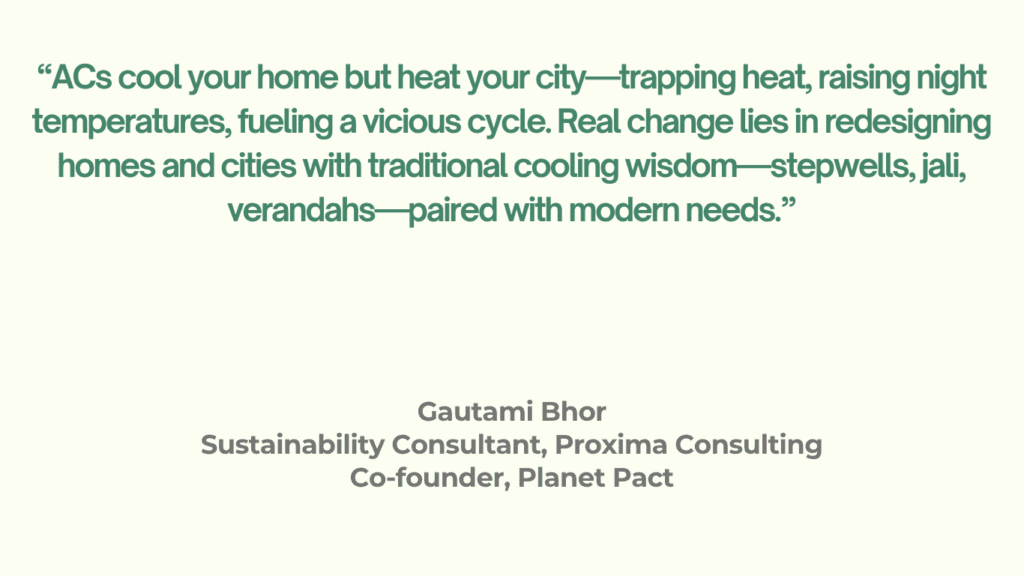
1. Stop Heat Before You Fight It
Passive cooling is underrated—and incredibly effective.
- Better insulation
- Reflective materials
- Smarter ventilation
These reduce heat entering your space, which means your AC doesn’t have to work overtime. It’s like fixing the leak instead of mopping the floor all day.
2. Make Energy Work for You
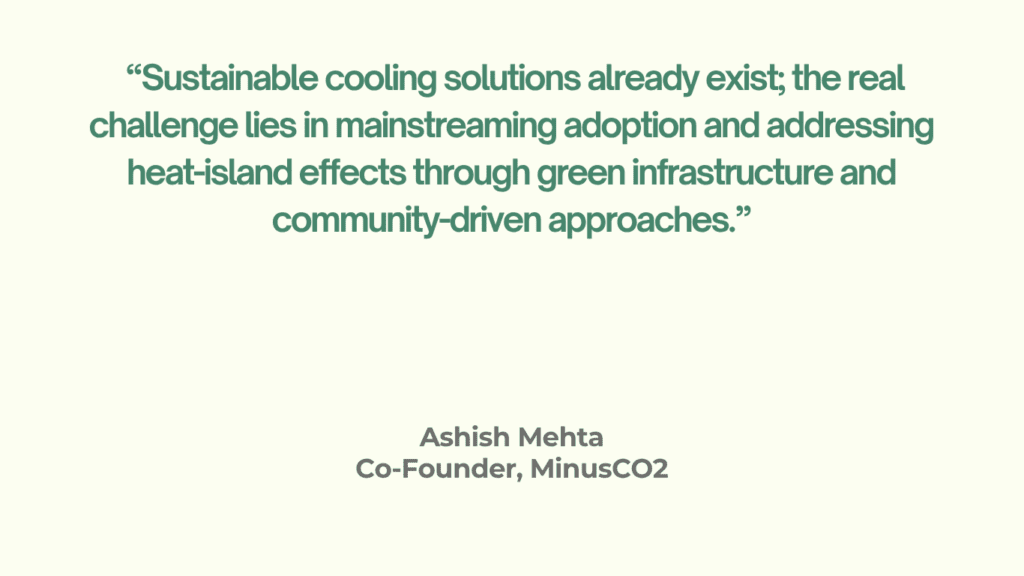
Rooftop solar isn’t just a sustainability badge anymore—it’s a cost strategy.
Generating your own energy reduces reliance on the grid and offsets heavy cooling loads during peak hours (aka the hottest part of the day).
3. Get Smarter About Cooling
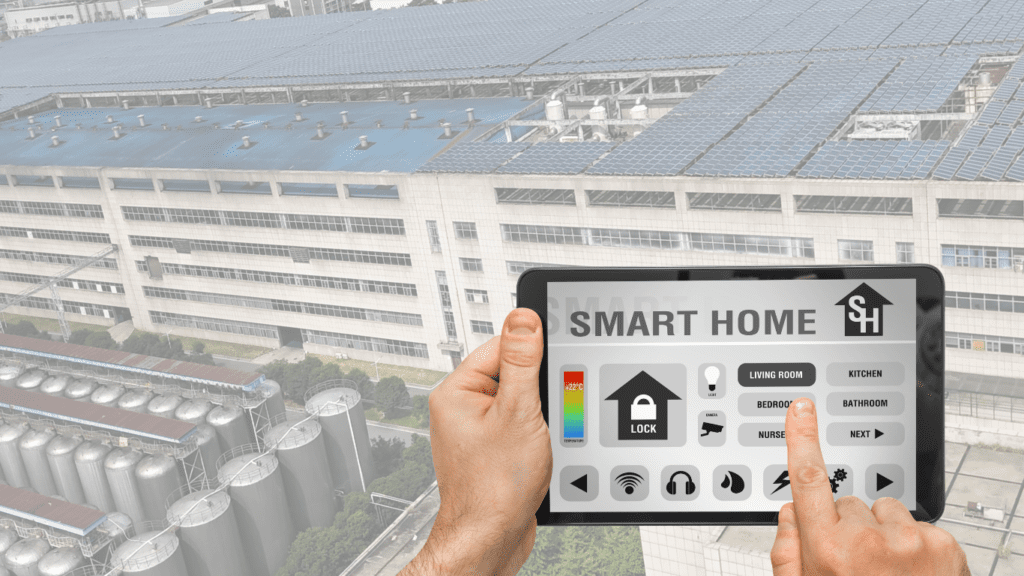
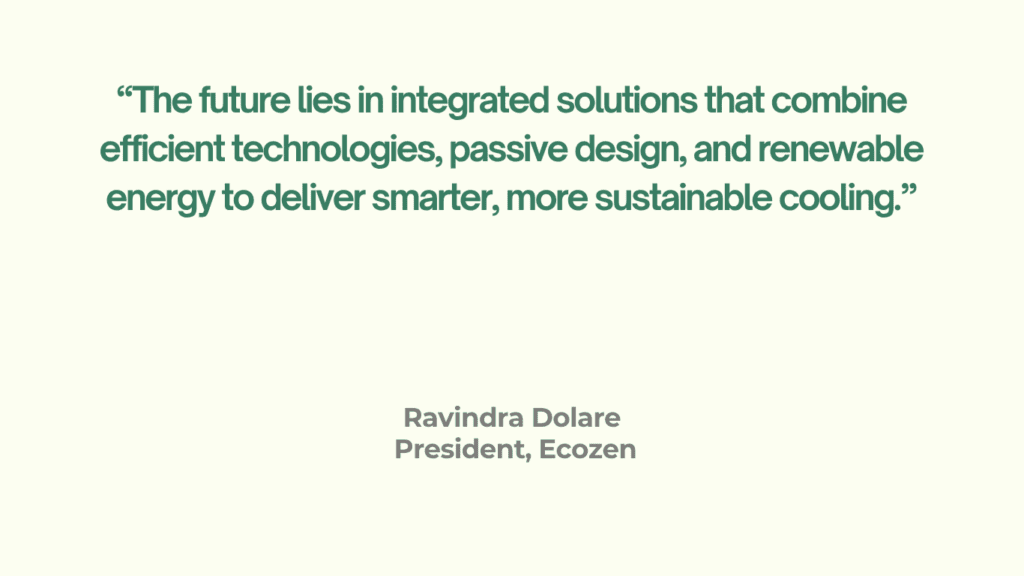
Modern HVAC systems aren’t just on/off machines.
They can:
- Adjust based on occupancy
- Optimise for time of day
- Reduce cooling in unused zones
Same comfort. Less waste.
4. Rethink “Peak Time”
Ever noticed how energy demand spikes at the worst possible times?
Thermal energy storage systems solve this by storing cooling energy and using it later—when demand (and costs) are higher.
It’s like pre-cooling your future.
5. Think Bigger: Shared Cooling
District cooling systems are gaining traction for a reason.
Instead of every building running its own inefficient setup, a centralised system cools entire clusters far more efficiently.
Less duplication. More efficiency.
What This Means for You (Yes, You)
If you’re running a business—or even managing a home—this isn’t background stuff anymore.
Cooling decisions now directly impact:
- Your operating costs
- Your energy efficiency
- Your sustainability credibility
And increasingly, your brand perception.
Because let’s be honest—people are paying attention.
The good news? You don’t need a massive overhaul to start.
Start with better questions:
- Are we cooling spaces we’re not using?
- Are our systems optimised—or just running?
- Are we designing for efficiency or just reacting to heat?
Most of the time, the answers reveal easy wins.
The Shift Is Already Happening
Across industries, there’s a quiet but clear shift.
Businesses are moving from:
👉 “How do we manage rising energy use?”
to
👉 “How do we design systems that don’t need as much energy?”
That’s a big difference.
It’s the difference between temporary fixes and long-term resilience.
And it’s being supported by a growing ecosystem—solar providers, sustainable architects, smarter HVAC tech, and better air quality solutions—all working toward one goal:
Using less energy, more intelligently.
The Bottom Line
Cooling isn’t going anywhere.
But the way we think about it? That has to change.
Because in a world that’s only getting hotter, the real advantage won’t come from having more cooling.
It’ll come from needing less of it.
And the businesses that figure that out early?
They won’t just save on costs.
They’ll build systems that are smarter, stronger, and actually future-ready.
So here’s your cue:
Take a closer look at how your space uses energy. Chances are, there’s more control there than you think. And if you need help figuring it out—well, you know where to find us.