
Your AI Obsession Actually Has A Hidden Environmental Impact
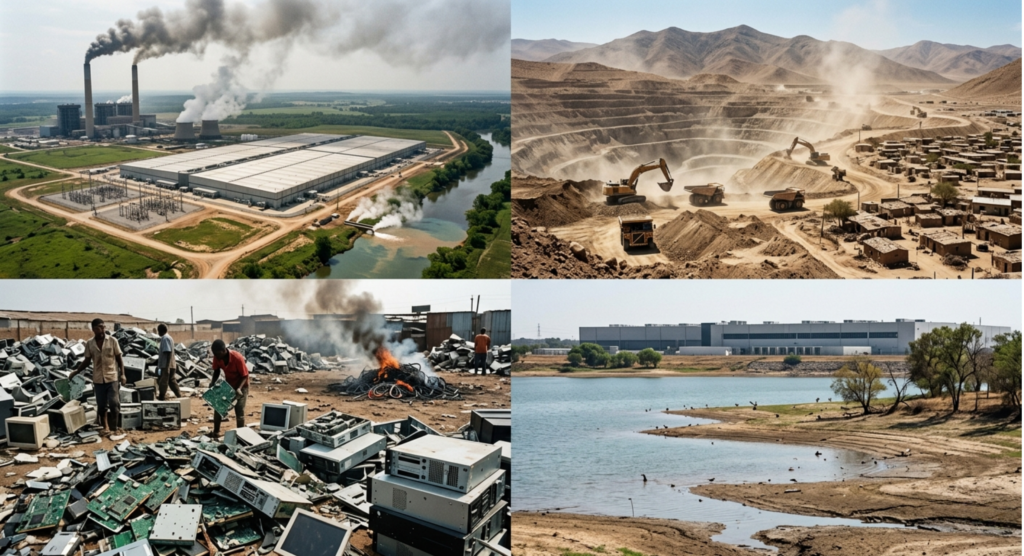
Every time someone asks AI to: “Turn my dog into a Studio Ghibli character.” “Write a breakup caption but make it toxic.” “Create a thought leadership post that sounds visionary.” Somewhere, a data center quietly starts sweating. For electricity. For cooling. For water. For survival. Welcome to the invisible environmental side of the AI boom.
The side nobody talks about while posting excited LinkedIn updates about “the future of innovation.”
Because while AI is becoming smarter every second, the infrastructure powering it is becoming hungrier.
Hungrier for energy. Hungrier for land. Hungrier for resources.
And honestly, AI itself is not the villain here.
The real issue is how recklessly the world might choose to scale it.

The Cloud Is Not Floating In The Sky. Sorry.
People love saying things like: “Oh, it’s stored in the cloud.”
Very cute.
Because the “cloud” is actually a giant network of physical servers sitting inside massive data centers consuming terrifying amounts of electricity 24/7.
And thanks to AI, that demand is exploding.
Industry estimates suggest global data center electricity consumption could more than double to around 945 TWh by 2030, driven largely by rapid AI growth and rising digital dependency.
Translation?
Your harmless AI prompts are part of an ecosystem requiring gigantic infrastructure expansion across cities and industrial zones worldwide.
Servers need power. Power creates heat. Heat needs cooling. Cooling needs water. And suddenly your funny AI-generated action figure is indirectly participating in a very serious environmental conversation.
Awkward.
Okay. Let’s Be Honest. AI Is Not Slowing Down.
Nobody is uninstalling AI.
Businesses are rebuilding operations around automation. Students are studying with AI. Healthcare is using predictive intelligence. Marketing teams are creating campaigns at lightning speed using AI agents
The AI revolution has already happened.
So the conversation cannot be: “Should we stop using AI?”
That ship has emotionally and technologically sailed.
The real question is:
How do we prevent progress from turning into environmental damage with better branding?
Because a “smart future” built on ecological destruction is still destruction. Just with nicer presentation decks.
This Is Where Smart Infrastructure Changes Everything
The future of data centers cannot just be about building bigger facilities faster.
That approach belongs to an older industrial mindset where growth mattered more than consequences.
The next generation of Sustainable Data Centers will need to think differently.
Not just: “How much can we scale?”
But also: “How intelligently can we operate while scaling?”
Which is why smarter companies are now investing in smarter, greener infrastructure models.
Companies like Microsoft, Google, and Amazon Web Services (AWS) are already pushing toward renewable-powered operations, low-carbon infrastructure planning, and more energy-efficient digital ecosystems because the future of AI cannot survive on irresponsible scaling forever.
Which is why smarter companies are now investing in:
- Renewable Energy Integration
- Energy Efficient Cooling Systems
- Smart Data Center Solutions
- Water Positive Operations
- Net-Zero Infrastructure
- Low-carbon building materials
- AI-powered energy optimisation
- Biodiversity-conscious infrastructure planning
And suddenly sustainability stops looking like a CSR department headache.
It starts becoming operational intelligence.
Some infrastructure players are already experimenting with more sustainable approaches. Data center companies like Equinix and Digital Realty have increasingly focused on renewable energy sourcing, energy-efficient cooling systems, and smarter operational monitoring to reduce environmental strain while scaling digital infrastructure.
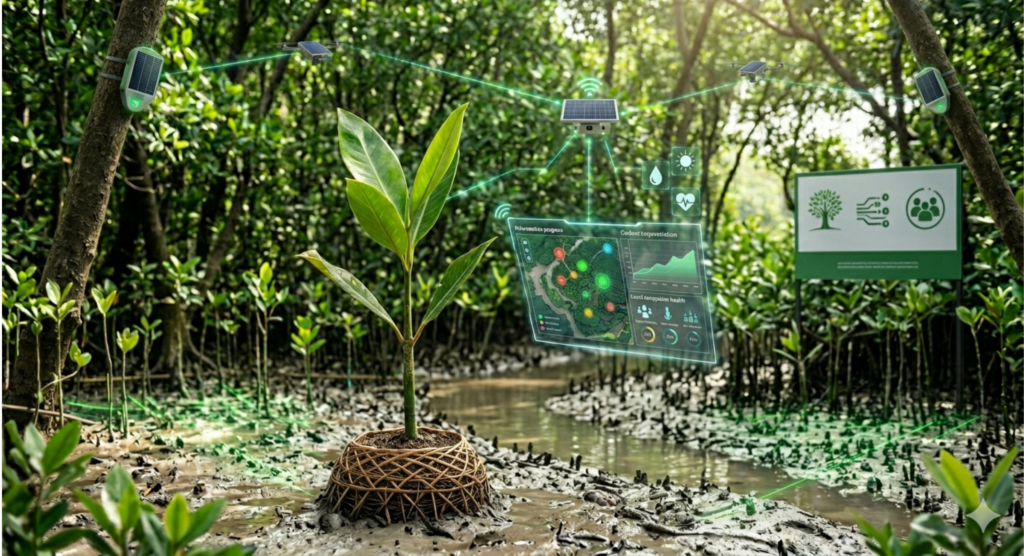
Others are exploring unique strategies like liquid cooling technologies, rainwater harvesting integration, heat reuse systems, and AI-driven energy optimisation to reduce power and water consumption inside large facilities.
Because the companies controlling environmental impact early may become the companies that survive longer, scale better, and attract more future-ready investors.
Funny how sustainability becomes important the moment profitability joins the conversation

Carbon Credits Alone Cannot Save Bad Infrastructure Decisions
Yes, carbon credits are great.
Offset ecosystems absolutely play an important role in reducing environmental impact globally.
But let’s not pretend buying offsets while wasting massive energy is some revolutionary climate strategy.
That’s basically the corporate version of ordering a diet soda with three cheeseburgers.
The future cannot rely only on compensation. It needs reduction.
Which means companies building data centers and AI infrastructure need to start asking uncomfortable but necessary questions:
- Can this facility operate more efficiently?
- Can cooling systems consume less water?
- Can renewable power become primary instead of optional?
- Can ESG-Focused Infrastructure become part of planning from Day 1 instead of the last presentation slide?
Because environmental responsibility cannot function like a yearly PR campaign anymore.
The Real Future Of AI Is Balance
AI will keep growing. Data centers will keep expanding. Digital consumption will keep increasing.
That part is inevitable.
But environmental destruction does not have to become inevitable alongside it.
The companies shaping the future now have two choices.
Build faster. Or build smarter.
And honestly?
The future will probably reward the companies that understand one important thing:
Progress and preservation are no longer opposing ideas.
The smartest infrastructure of the future will not just process information efficiently.
It will also understand how to coexist responsibly with the planet powering it.
Because eventually, even AI will need a livable world to operate in.
AI wants to get big. Earth wants to stay cool. Got a hack that lets both win? Tell us in the comments below. Also, tag organizations already fighting this fight with sustainable solutions—we’d love to feature them on our website.