
India’s E20 Policy and Our Media Obsession with Finding a New Scapegoat
One viral video, one smokestack, one convenient conclusion. Whose side are you on?
A recent video about Byrnihat, Meghalaya, brought fresh attention to a town that has repeatedly featured in discussions around air pollution in Northeast India. In the past, reports have highlighted concerns around particulate matter concentrations, industrial activity and the impact on public health.
Byrnihat, a town with about 6,000 residents, sits along the Assam-Meghalaya border and hosts a dense cluster of industries, including cement plants, distilleries, ferroalloy units and beverage manufacturing facilities. Research points to a combination of industrial emissions, vehicular traffic, road dust, construction activity and local meteorological conditions as contributors to its air quality.
In 2025, Byrnihat was ranked the world’s third most polluted city by IQAir, and in 2024, the world’s most polluted metropolitan area, per their annual air quality report. Here, pollution is not just a statistic. Residents have repeatedly raised concerns about respiratory illnesses and what it means to live near heavy industrial activity.
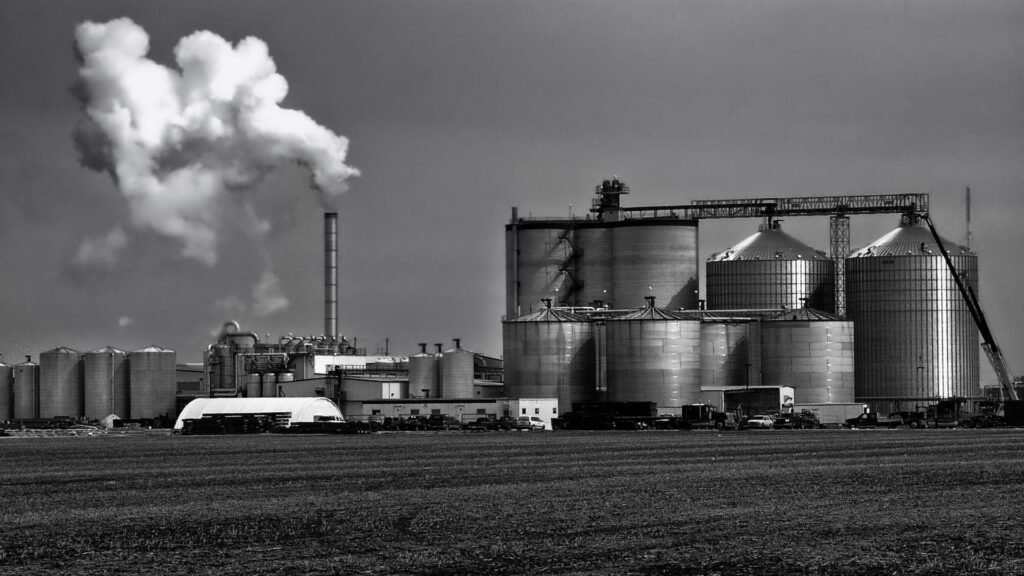
The viral video shows smokestacks rising above industrial facilities. And among them sat an ethanol plant. The comments section erupted: If there’s an ethanol plant in one of the world’s most polluted towns, what did that mean for India’s nationwide E20 fuel rollout? Is ethanol part of the problem? Are cleaner fuels actually making pollution worse?
A complex environmental issue had been oversimplified, and a single suspect identified.
We’ve Seen This Before
Every few months, environmental debates find a new culprit. Plastic straws, Firecrackers, Petrol and diesel cars become the face of much larger crises in spite of a relatively much smaller contribution to climate change. They’re visible, easy to rally against — but they don’t tell the whole story. Environmental problems are systems problems, driven by multiple interconnected factors that public debate often ignores.
Air pollution studies consistently show that urban air quality problems are not driven by any one single contributor, as Byrnihat’s own mix of industry, traffic, construction dust and terrain shows. Mining and quarrying activity adds another layer on top of the causes already at play.
Which is why India’s ethanol programme deserves a closer look — because understanding its role in pollution and the country’s economy requires looking beyond simple answers.
Meanwhile, India Was Having A Completely Different Ethanol Conversation
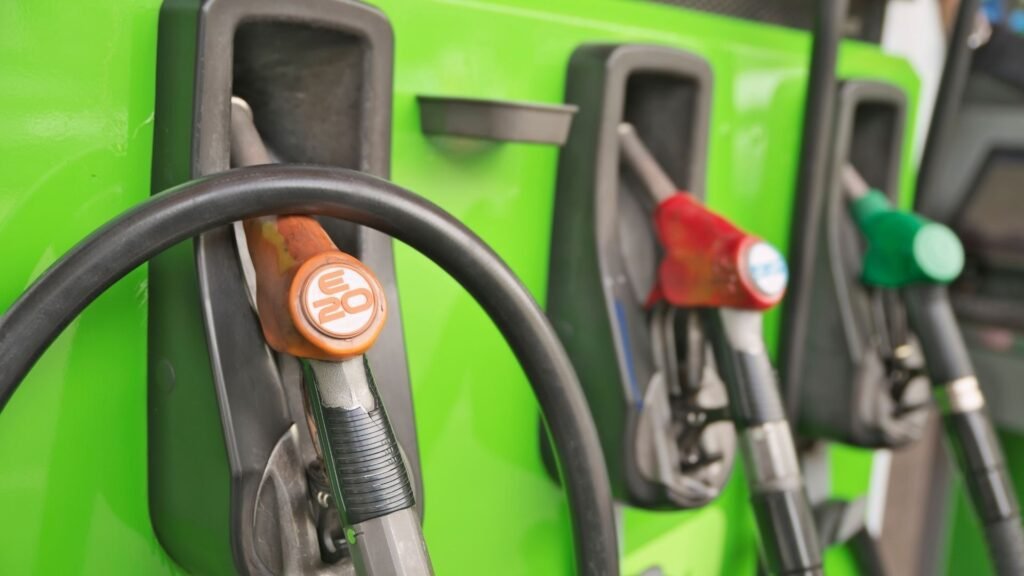
While social media debated ethanol, India had a very different reason for promoting it. The E20 programme, introduced under India’s national biofuel policy, wasn’t designed to solve urban air pollution or battle climate change —it meant to reduce crude oil imports, support domestic agriculture, and diversify the country’s fuel mix. E20 simply means petrol blended with up to 20% ethanol from agricultural feedstocks such as sugarcane and maize.
On paper, it sounds like a win.
But, as with most environmental solutions, reality is more complicated.
Since its rollout, motorists, automobile manufacturers and policymakers have raised questions around E20’s performance, compatibility and long-term impacts. The answers are less dramatic than the internet suggests:
• Will my mileage drop?
Ethanol contains roughly 33% less energy per litre than petrol, so a small drop in fuel economy is expected. ARAI and SIAM studies suggest real-world mileage loss in E20-compatible vehicles generally stays within a low single-digit percentage range.
• Will older engines struggle with E20?
All petrol vehicles made from April 2023 onward should be built for E20 compatibility. Manufacturers, including Maruti Suzuki, Hyundai, Tata Motors and Honda, have already introduced E20-compatible models. Older vehicles may need periodic checks on rubber seals, fuel lines and elastomer components, since ethanol absorbs more moisture than pure petrol over time — but that’s a maintenance consideration, not evidence that E20 damages engines or renders older vehicles unusable.
• Is ethanol blending the same thing as fuel adulteration?
No. E20 follows BIS specifications and government-approved blending protocols — a regulated fuel standard, not an adulterant.
• Is this an environmental decision or an economic one?
Both. It’s the same trade-off: less crude dependence and stronger energy security on one side, transitioning to lower transport-fuel carbon intensity on the other — though the real environmental payoff depends on how the ethanol itself is produced.
None of this makes for a dramatic headline — the E20 debate turns out to be a maintenance conversation, not a scandal. And that’s precisely where it starts to rhyme with Byrnihat.
But nuance rarely goes viral.
Cleaner Fuel Doesn’t Automatically Mean Cleaner Systems
This is where Byrnihat and the E20 debate meet. Because sustainability campaigns love catchalls: Ban plastic bags, buy an electric vehicle, blend ethanol. Problem solved, right? Not really.
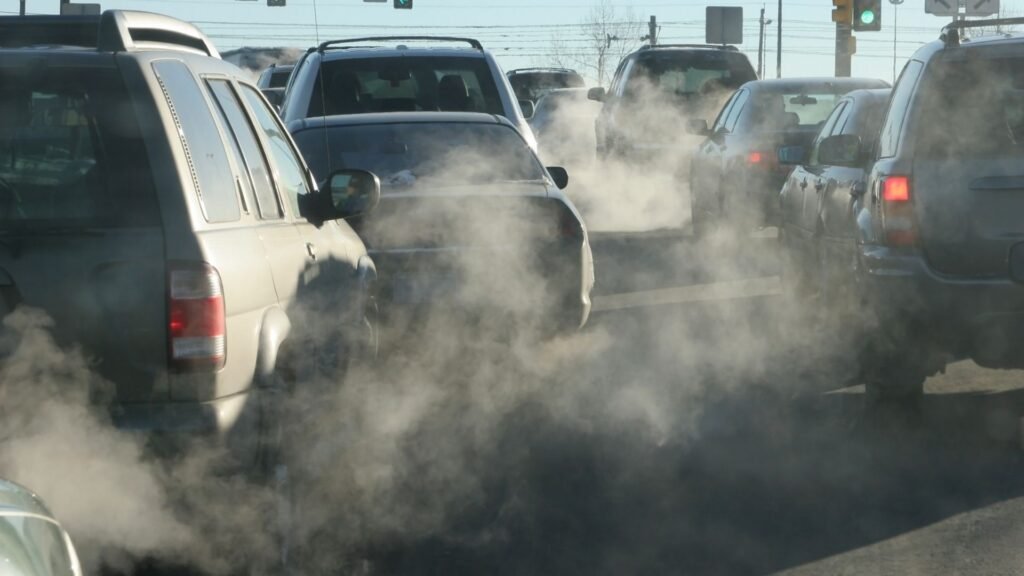
Reducing tailpipe emissions doesn’t automatically address particulate emissions from cement plants, distilleries, metal processing or freight transport — all of which drive regional air quality down. Improved fuel quality doesn’t remove the need for cleaner manufacturing practices, because real change doesn’t happen if one sector improves while every other sector carries on as before. The environment, rather inconveniently, tends to demand improvement from everyone at the same time.
The Questions We Should Probably Be Asking Instead
Perhaps the conversation was never supposed to be about whether ethanol is good or bad. The more relevant questions (and their answers) are usually harder to fit into an Instagram post.
- How clean is ethanol production?
Its environmental performance depends on feedstock selection, energy sources for production, wastewater treatment systems, emissions controls and overall plant efficiency. - How quickly are violations identified?
CPCB and state pollution boards now use online monitoring and compliance reporting systems, although experts frequently call for stronger enforcement capacity and faster response mechanisms. - Can gains in one sector be cancelled elsewhere?
Yes. Emissions reductions from transport can be offset if industrial emissions keep rising, which is why air quality strategies increasingly focus on multi-sector interventions rather than isolated fixes.
These questions are considerably less exciting than finding someone to blame. They’re also considerably more useful.
The Internet Loves A Smoking Gun
The Byrnihat story mattered. Not because it gave us answers, but because it reminded us how quickly we search for them—and settle for the first one we get.
Cleaner fuels do matter. So do cleaner factories, cleaner transport systems, stronger regulations, and community accountability. Environmental problems rarely have one villain waiting to be exposed—which means they rarely have one hero waiting to save the day, either.
Somewhere between a video from Meghalaya and a fuel pump in Mumbai sits an uncomfortable truth: sustainability is usually less about choosing sides and more about improving systems. The next viral video will find its next villain. The work, meanwhile, will keep needing all of us — because dismantling and rebuilding systems (unlike social media virality) can’t be achieved in 30 seconds, or even 90.
So the real work isn’t blaming ethanol or clearing its name. It’s holding policymakers to the same standard we’re holding social media opinionators to, and asking: Are incentives built around genuine outcomes — cleaner air, safer engines, transparent industry — or just around hitting a number? Until that changes, we’ll keep mistaking targets met for problems solved.
Are you thinking about giving E20 a shot? Or is your vehicle already running on E20, and if so, have you noticed a difference?
Where do you stand on ethanol as a cleaner fuel after reading this? Join the conversation below.