
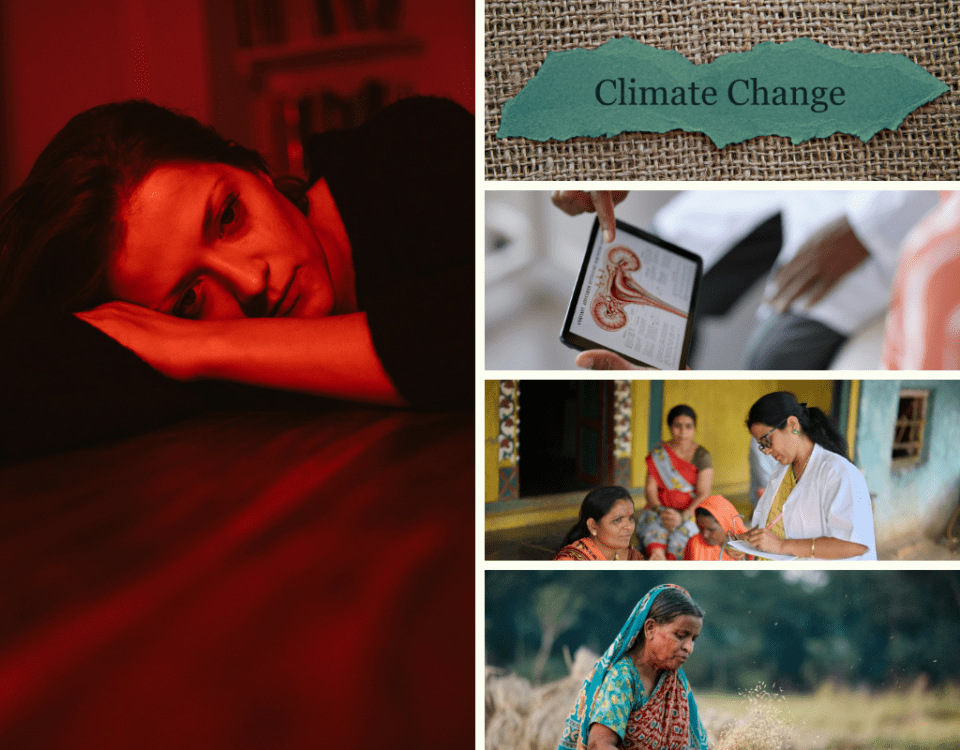
This World Menstrual Health Day We Focus On The Looming Threat of Climate Change
Because Climate Change Is Already Being Felt: In Women’s Bodies across lifecycles
Newspapers, social media, climate reports, weather updates, bedroom conversations, drawing room conversations, club & gym conversations, environmental and women’s rights activist voices, almost everyone around us seems to be saying the same thing lately.
“It’s too hot.” “This is extreme heat.” “We are in the middle of an intense heat wave.” “It feels like I am melting.”
These conversations bother us for a few moments before we return to the coolness of our air conditioning. In many ways, we “cancel” the phenomenon of extreme heat and place it somewhere distant from us, much like the larger climate crisis itself.
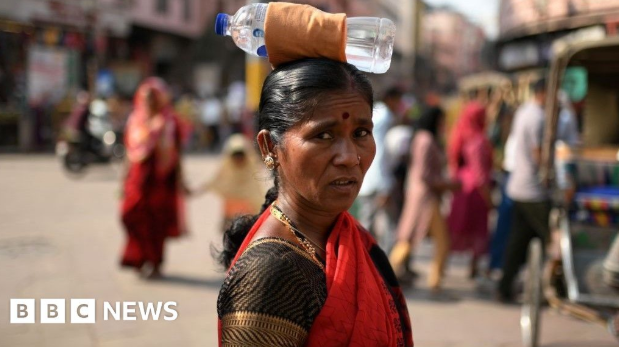
Image source: BBC News
But now let us shift our focus to irregular periods, missed periods, changes in menstrual flow and, for those of us in the dreaded perimenopause and menopause phase of our lives, hot flashes, extreme sweating, extreme fatigue, night sweats, sleep disruption or the complete inability to sleep just a point a few symptoms.
That feels personal. In fact, it feels almost life-threatening. This is a feeling we cannot escape even when we physically escape the heat.
Connecting the Dots Between Climate and Menstrual Health
It’s more connected than we can wrap our heads around. On World Menstrual Health Day, I find myself asking a question that still remains largely absent from mainstream climate discourse. Is climate change playing a debilitating role in women’s menstrual health across the female life cycle?
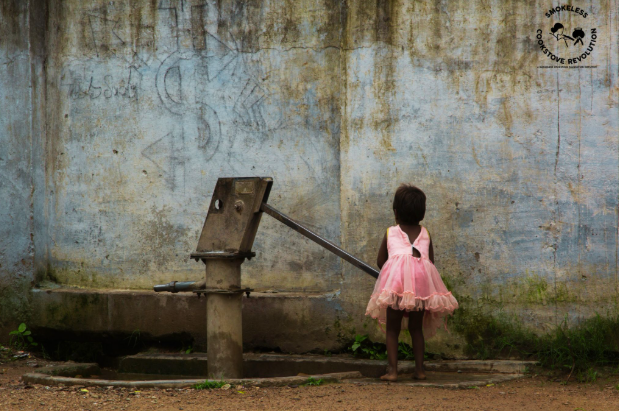
Image Source: Smokeless Cookstove Foundation archives
I have a deeply personal and intergenerational context to this subject within my own home.
As a mother of an active, physically fit 17-year-old daughter with a healthy diet and sleep cycle, I watch her struggle with period irregularity, fatigue and pain severe enough to visibly slow her down. Consultations with specialists almost always circle back to the same responses, stress, food habits, hereditary patterns, too much social media and screens, unstable emotional environments etc.. “Almost all teenage girls are facing this,” we are told.
Representative image, Source: Education World
But what if it is also linked to climate and changing weather patterns that our bodies are unable to predict or adapt to?
My mother, now 70, physically disciplined and almost military-like in her habits around food, fitness and sleep, transitioned through menopause nearly 25 years ago without significant physical breakdowns, though it is difficult to know what she may have experienced emotionally, because women of that generation rarely allowed themselves visible vulnerability for the sake of their families.
As for me, a perimenopausal woman equally diligent about food, movement, sleep and emotional wellbeing, I often find myself sitting with questions and drawing blanks when it comes to understanding what is truly happening to my body and whether climate change has anything to do with it.
What the Research Is Beginning to Reveal
At times when I would be on field with some of my women’s group trying to understand their health challenges, some of these threads would appear vaguely. But soon it revealed itself as an emerging area of global research.
I learnt that rising temperatures can affect the body’s hormonal balance because the menstrual cycle is regulated by a delicate system involving the brain, the pituitary gland and the ovaries. As my yoga teacher, who is also a menopause support coach, often says that ‘menstrual health begins in the brain.
’Emerging evidence now suggests that women exposed to high temperatures report cycle irregularities more frequently. Extreme heat may act as a physiological stressor, disrupting hormonal signalling and contributing to irregular cycles, missed periods and changes in menstrual flow. Heat also increases dehydration and fatigue, intensifying symptoms like cramps, headaches and exhaustion.
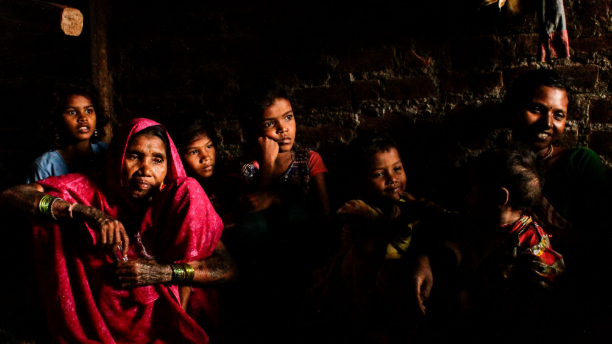
Image Source: Smokeless Cookstove Foundation archives
Why This Matters More Than Ever
Menstrual health continues to remain largely overlooked in climate policy, despite being deeply connected to public health, gender equity and human rights.
When systems fail under climate pressure, women absorb the impact first and most intimately.
Water scarcity affects menstrual hygiene, heat intensifies fatigue and hormonal stress. And when menstruation or menopause becomes harder to manage, it impacts every aspect of a woman’s life physically, emotionally, physiologically and socially.
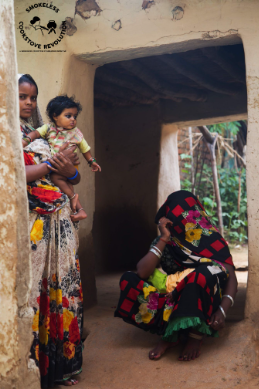
Image Source: Smokeless Cookstove Foundation archives
Isn’t it bound to affect our future as human civilization on a global collective level if not understood, mitigated and adapted sooner than later?
The Urban–Rural Divide
While this issue is personal for many women like me, the research points to a glaring and obvious urban-rural divide.
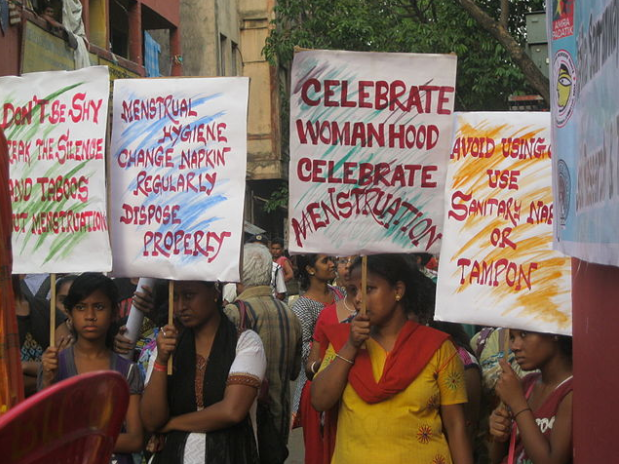
Amra Padatik India, celebration of Menstrual Hygiene Day, 2014. Photo: Wikimedia commons
To help understand this urban-rural divide, I reached out to Karishma Navalkar, Impact Lead at Baala. Baala is a social organisation working in the area of improving sexual and reproductive wellbeing and menstrual health across India and beyond and doing some incredible work.
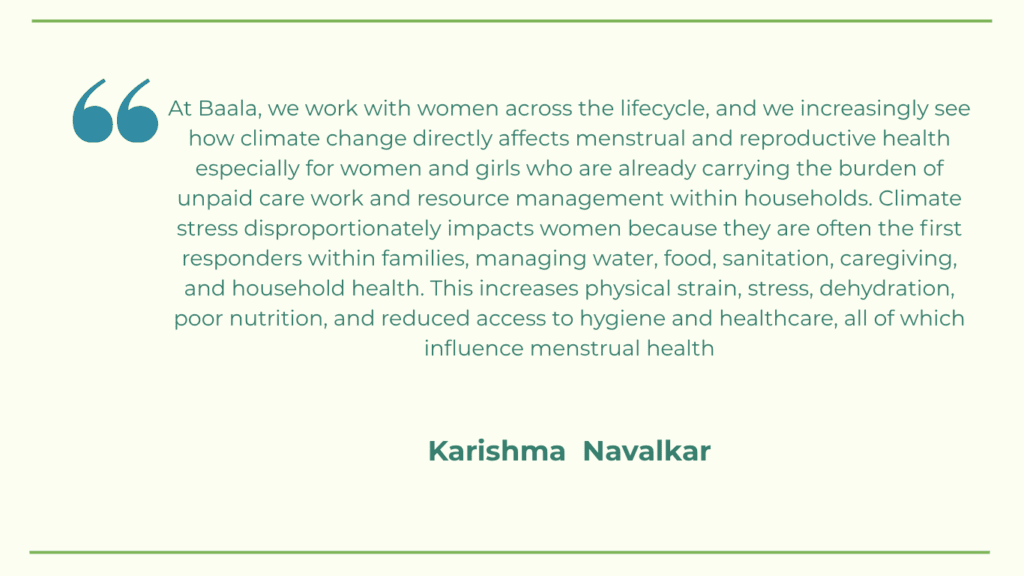
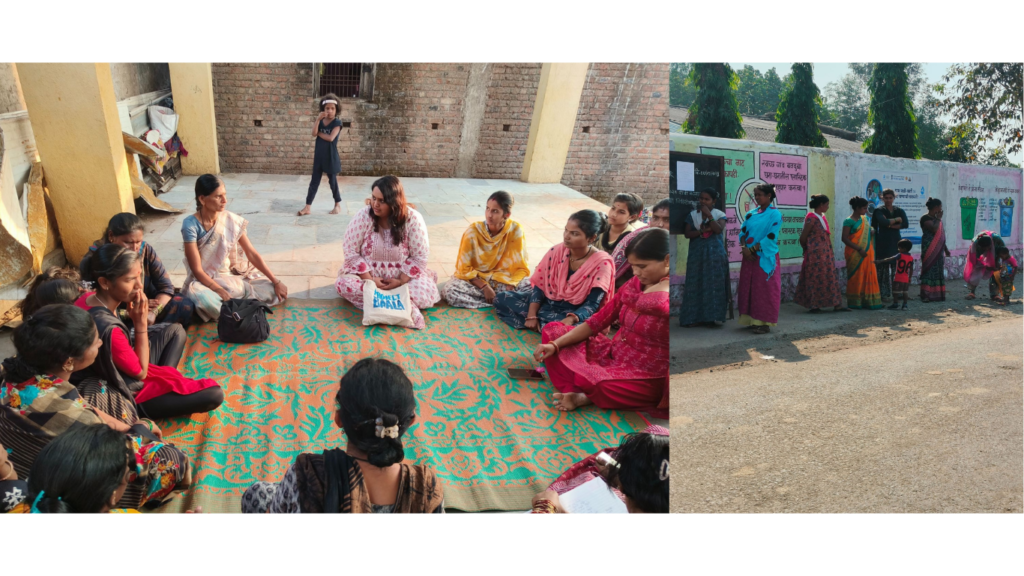
Image source: Baala
In certain urban spaces, conversations around menstrual health across the life cycle including Menopause are slowly entering mainstream discourse through clinics, wellness programmes, digital communities and celebrity-led platforms. One can say there is a gradual shift from simply managing periods to understanding cycles.
Actress and Women’s Health advocate, Lisa Ray’s NuHer is dedicated to women’s health focusing on perimenopause and menopause. Similarly, actress Mini Mathur has launched her own initiative in this space – Mini Mathur’s Pausitive.

Image Source: Google
But in many rural contexts, menopause is still viewed merely as aging. Symptoms like hot flashes, anxiety, fatigue and sleep disruption are neither medicalised nor supported. There is little language, awareness or healthcare infrastructure available to address them.
Women are simply expected to endure silently.
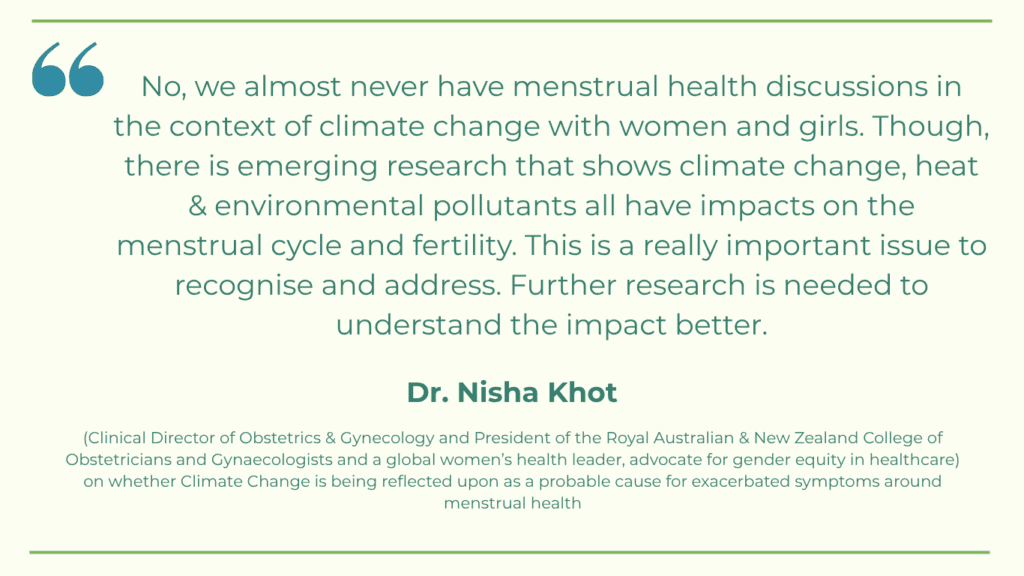
Highlighting critical observations emerging from Baala’s field work, Karishma shares,
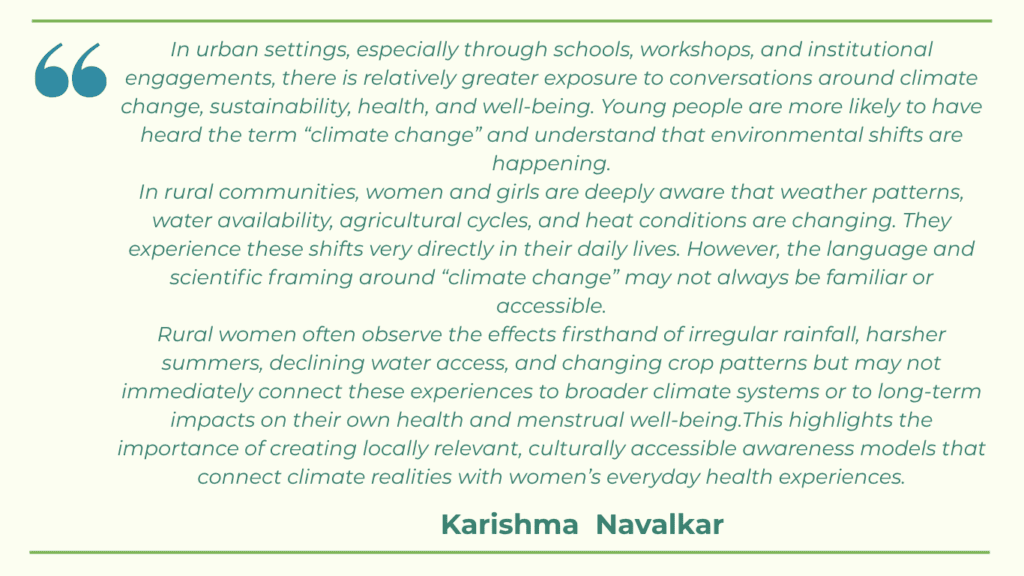
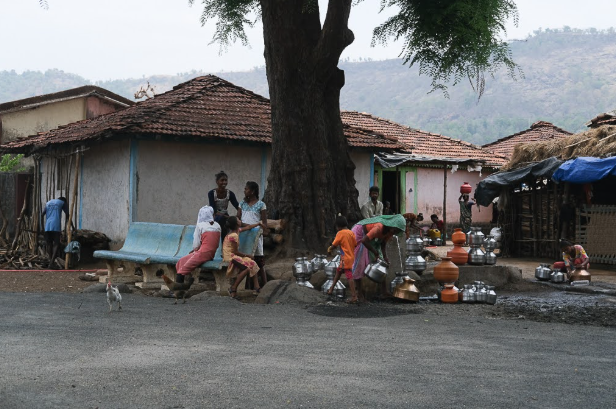
Image Source: Smokeless Cookstove Foundation archives
She further confirms the core inquiry of this article, that “Climate change is therefore not only an environmental issue; it is deeply connected to women’s bodily health, dignity, education, and long-term well-being.”
Climate change, which itself remains poorly understood across many communities, acts as a stress multiplier across both ecosystems. It strains already fragile rural infrastructures, exposes inequalities within urban systems, and intensifies bodily experiences like heat, fatigue and stress across both.
Real life learning from Smokeless Cookstove Foundation – Kitchens as Sites of Climate Exposure
It is impossible for me to examine this issue without speaking about women’s everyday unpaid labour. Particularly the labour of cooking and everything it involves.
Through my work with the Smokeless Cookstove Foundation and several large-scale clean cooking initiatives, we often documented energy drudgery and its impact on women’s health. However, the focus remained largely restricted to respiratory and cardiovascular impacts coughing, irritation, watering eyes, smoke inhalation and indoor air pollution.
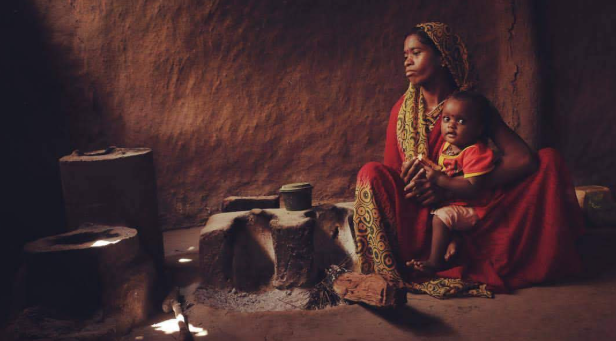
Image Source: Smokeless Cookstove Foundation archives
The connection with menstrual and reproductive health was almost never studied.
For any meaningful clean energy transition, the lens now needs to move beyond respiratory health and include the reproductive and hormonal health trajectories of women exposed to prolonged indoor and outdoor pollution. And this concern is no longer limited to rural or biomass-dependent communities.
A recent Times of India article on high AQI and severe menstrual pain expands on how polluted air may affect reproductive health beyond respiratory illness. As urban pollution intensifies, the connection between environmental stress and menstrual wellbeing can no longer be treated as peripheral.
This is where organisations like Baala are providing the critical lever. The team at Baala tries to address this linkage and several other women’s health issues by working across both evidence building and on-ground intervention.
Climate change does not arrive equally or with a fair warning – it’s here! In our bodies.
It settles into existing inequalities; into harsh labour, into healthcare gaps, into infrastructure, into access, and ultimately into the body itself. And for millions of women both in urban and rural ecosystems, it is already being experienced quietly, repeatedly and invisibly in the spaces that sustain households every single day.
Perhaps this World Menstrual Health Day, the conversation needs to move beyond hygiene alone. Because menstrual health is evidently not separate from climate, public health, gender justice or environmental wellbeing. It sits at the intersection of all of them.
And maybe the real question before us is no longer whether climate change is affecting women’s bodies. But how long it will take for us to acknowledge it, study it, and respond to it with the seriousness it deserves?
____________________________________________________________________________
Further reading & references
- A 2025 peer-reviewed paper, “The Ripple Effect: Impacts of Climate Change on Menstrual Health,” examines how heat stress, climate-related disasters, displacement and resource insecurity are beginning to affect menstrual health outcomes globally. The study highlights links between rising temperatures, disrupted access to menstrual products and sanitation, and increasing menstrual health challenges, particularly among low-income women and girls. Importantly, it frames menstrual health not merely as a hygiene issue, but as a climate justice and public health concern. Frontiers in Global Women’s Health – The Ripple Effect: Impacts of Climate Change on Menstrual Health
- “Menstruation: Environmental Impact and Need for Global Action,” published in the public health and obstetrics literature, positions menstrual health at the intersection of human rights, environmental sustainability and public infrastructure. The paper argues that environmental degradation, weak sanitation systems and climate vulnerability disproportionately affect women’s ability to manage menstruation safely and with dignity. International Journal of Gynecology & Obstetrics – Menstruation: Environmental Impact and Need for Global Health Equity
3. According to a research Air Pollution is Worsening Reproductive Health Outcomes for Women – “Public health research has traditionally focused on air pollution’s respiratory impacts, while its effects on women’s reproductive health have “mostly slipped under the radar.”
About the Author
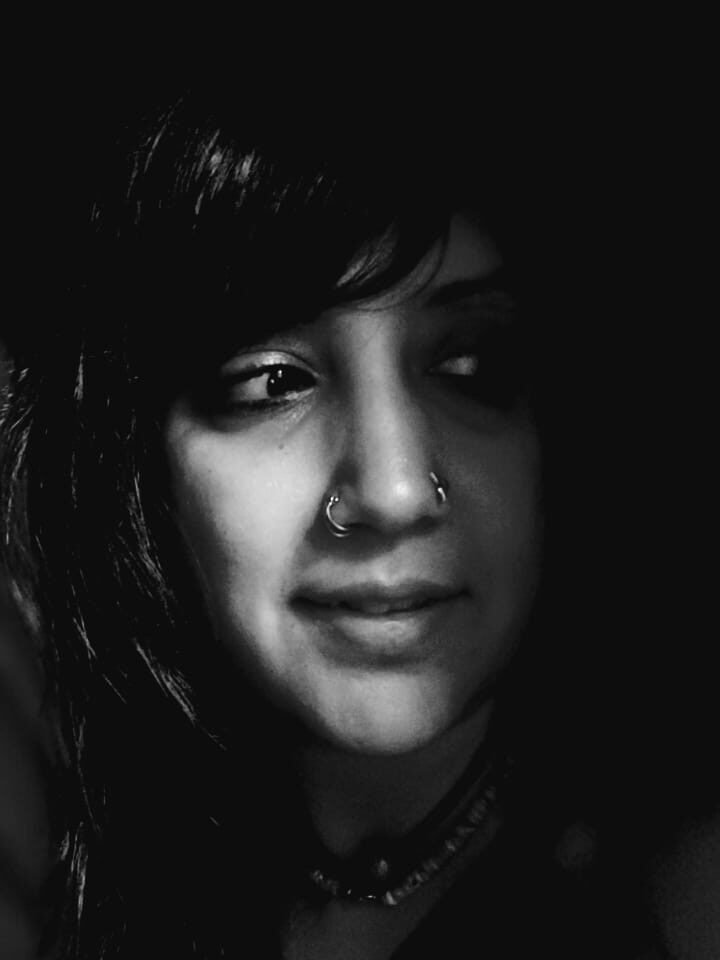
Nitisha is the Founder & Director of Smokeless Cookstove Foundation that works with communities across India to create awareness about clean energy and various health & livelihood linkages. She spent 17 years in the corporate sector working for Indian and Multinational companies in leadership roles before transitioning to the impact sector. Currently pursuing Bioleadership Fellowship, UK, she consults with clean tech start-ups and wellness focussed projects. She is an erstwhile Godrej Design Lab fellow and is an alum of The Earth Charter, Columbia University, Gaia Education and Capra Course with several distinguished certifications to her credit. She also serves as a mentor with Clean Cooking Alliance for Women in Clean Cooking in Asia & Africa and is a member of Catalyst Now.