Back to School: The Annual Obsession With Pointless Purchases
Every year, as schools reopen, a remarkable transformation takes place across households. Perfectly functional notebooks suddenly become “old.” School bags that survived an entire academic year become “outdated.” Pencil boxes lose their charm. Water bottles lose their relevance. Uniforms that still have years of service left in them are quietly demoted to the darkest corner of the wardrobe.
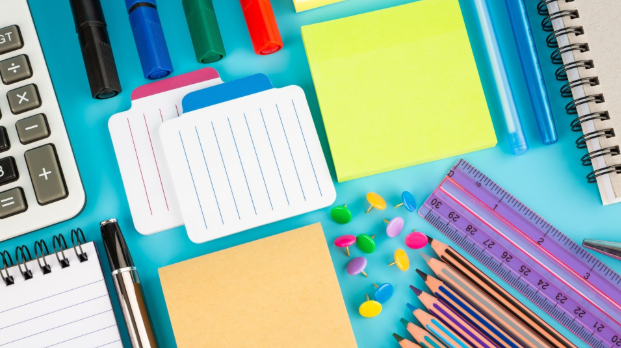
Then begins the annual back-to-school shopping spree.
Parents spend thousands replacing things that worked perfectly well a month ago. Children enthusiastically select supplies that will mysteriously disappear by August. Retailers celebrate. Cupboards wonder what they did wrong.
The entire exercise feels a bit like replacing your house because you misplaced the keys.
Technically, you’ve solved the problem.
Strategically, there may be some issues.
Yet every year, we participate in one of sustainability’s most overlooked contradictions.
We spend eleven months teaching children about reducing waste.
Then dedicate an entire season to creating more of it.
The Great School Supplies Illusion
Let’s start with a slightly uncomfortable truth.
Most school supplies don’t reach the end of their life.
They simply reach the end of children’s’ interest.
Take notebooks. Almost every household has a pile of half-used notebooks tucked away somewhere. They contain a few chapters of notes, an unfinished doodle, a timetable from last September, and enough blank pages to survive another school year.
The notebook isn’t finished.
The academic year is.

The same story plays out with uniforms, bags, lunch boxes, stationery, and clothing. Products that could easily continue serving a purpose are discarded simply because a new academic year has arrived.
Which raises an interesting question:
Have we accidentally confused “new school year” with “replace everything”?
Because the planet certainly didn’t ask for that.
So What Do We Do Instead?
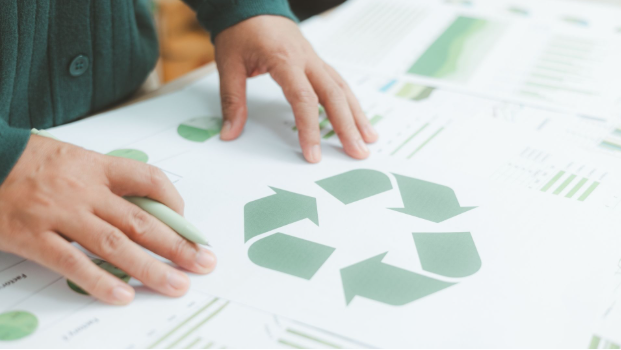
Fortunately, sustainability doesn’t require children to attend school carrying notebooks made from banana peels while drinking water from handcrafted coconut-shell cups.
Most of the time, it simply requires looking at ordinary household items and asking a surprisingly radical question:
“Are we absolutely sure this is waste?”
The answer is often inconvenient for retailers.
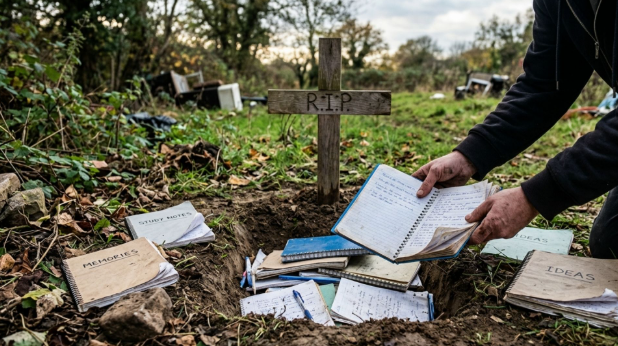
PROJECT 1: The Notebook Resurrection Program
Let’s begin with the annual notebook graveyard.
Instead of purchasing fresh notebooks immediately, collect the unused pages from old ones and create something entirely new.
You can:
• Combine blank pages into revision books
• Create sketchbooks and journals
• Build DIY planners
• Use old cardboard packaging as notebook covers
• Turn leftover pages into subject-wise workbooks
What was once considered waste suddenly becomes useful again.
The notebook gets a second life.
The tree that became the notebook probably appreciates the effort.
PROJECT 2: Operation Uniform Reboot
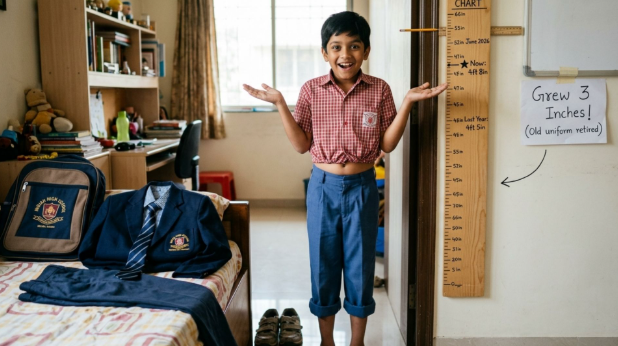
School uniforms have one of the shortest careers in human history.
A child grows three inches.
Every year, countless uniforms remain perfectly wearable but spend the rest of eternity hanging inside wardrobes waiting for a future that never arrives.
Instead of preserving them as historical artefacts, consider:
• Donating them to students in need
• Participating in uniform exchange programmes
• Organising neighbourhood swap drives
• Creating school-wide donation campaigns
A donated uniform doesn’t just reduce textile waste.
It helps another child walk into a classroom with dignity.
That’s a far better outcome than spending the next decade on a hanger- or worse: a landfill.
PROJECT 3: The Curious Case Of The Missing Sock
Every family owns them.
The orphan socks.
The survivors.
The lone warriors whose partners mysteriously vanished during laundry day.
Nobody knows where the missing socks go.
Science has theories. None are particularly reassuring.
What we do know is that these abandoned socks deserve better than landfill.
Try transforming them into:
- Pencil holders
- Study-desk organisers
- DIY stress balls
- Cleaning mitts
- Gadget sleeves
- Small indoor planters
- Sock puppets
It’s difficult to call something “waste” when it’s helping organise your entire stationery collection.
PROJECT 4: The Paper Rescue Mission
By the end of every school year, worksheets, old assignments, rough sheets, project papers, and printed notes accumulate in drawers and cupboards.
Most eventually end up in the recycling bin. But before that happens, they still have value.
Try transforming paper waste into:
- Handmade notebooks for rough work
- Flash cards for revision
- Origami and craft projects
- Gift tags and bookmarks
- Classroom notice-board material
- DIY paper-mâché projects
Even schools can organise paper collection drives and partner with recyclers to ensure old academic material stays within the circular economy.
The People Who Took This Idea Way Too Seriously (In The Best Possible Way)
Here’s the good news.
The idea of giving old things a second life isn’t some Pinterest trend invented during a rainy weekend.
Across India, organisations and brands have quietly built entire ecosystems around reuse, repair, and circularity.
And honestly, they’re making the rest of us look a little lazy.
Goonj transforms surplus clothes, stationery, and household materials into resources for communities that need them most. Through initiatives like School to School, old educational supplies continue helping children long after their first owner has moved on.
Green by Goonj takes discarded textiles and converts them into entirely new lifestyle products, proving that fabric waste is often just creativity waiting to happen.
Share At Door Step Most people don’t donate old books, school bags, or stationery for one simple reason: life gets busy. Share At Door Step solves that problem by collecting reusable items directly from homes and connecting them with communities and NGOs that can put them to good use. Because sometimes sustainability isn’t about buying less. It’s about making it easier to share more.
ReCircle works to keep textiles in use for longer through collection, sorting, reuse, and responsible recycling programmes.
Respun focuses on giving discarded textiles a second life by diverting fabric waste from landfills and converting it into reusable resources and products.
GreenSole Foundation collects discarded footwear and upcycles old shoes into usable footwear, school bags, mats, and other products for underserved communities. Since its inception, the organisation has helped divert thousands of shoes from landfills while supporting children across India.
This is particularly relevant because children outgrow school shoes almost as quickly as they outgrow uniforms.
5Rcycle Foundation promotes circular waste management through collection, recycling, reuse, repurposing, and awareness programmes. The organisation runs school collection drives and recycling initiatives covering plastics, dry waste, and even electronic waste.
Old water bottles, lunch boxes, plastic stationery containers, and similar items can often be recycled through structured programmes instead of ending up in landfills.
The Recycle Environmental Solutions (TRECO / Threco) works in the e-waste management space, helping organisations responsibly recycle outdated electronics such as keyboards, headphones, tablets, chargers, and computer accessories. As schools become increasingly digital, responsible e-waste disposal is becoming just as important as recycling paper and plastic.
Their collective message is simple:
The most sustainable product is often not the new one.
It’s the one already in circulation.
The Bigger Lesson Hidden Inside These Projects
The real value of these DIY projects isn’t the notebook.
Or the uniform.
Or the sock.
Or even the pouch.
It’s the mindset.
Because sustainability has a branding problem.
Somewhere along the way, we’ve convinced ourselves that sustainable living requires expensive products, dramatic lifestyle changes, and a cupboard full of bamboo alternatives.
In reality, sustainability is often far less glamorous.
It looks like repairing something instead of replacing it.
Reusing something instead of discarding it.
Questioning whether a purchase is necessary before making it.
These aren’t environmental superpowers.
They’re common sense wearing a green jacket.
So What Does A Sustainable School Year Actually Look Like?
It doesn’t require perfection.
It doesn’t require eliminating waste overnight.
And it certainly doesn’t require spending more money on products labelled “eco-friendly.”
A sustainable school year begins with a simple question before every purchase:
“Do we actually need a new one?”
Because somewhere inside a cupboard, wardrobe, drawer, or forgotten storage box, the answer is often already waiting.
At Green Pistachio, we believe sustainability starts long before recycling bins, climate pledges, and carbon calculators. It starts when we stop treating useful things like disposable things.
This back-to-school season, perhaps the most sustainable school supply isn’t the one sitting on a store shelf.
It’s the one you’ve already got.
The question is whether we’re creative enough to see it.